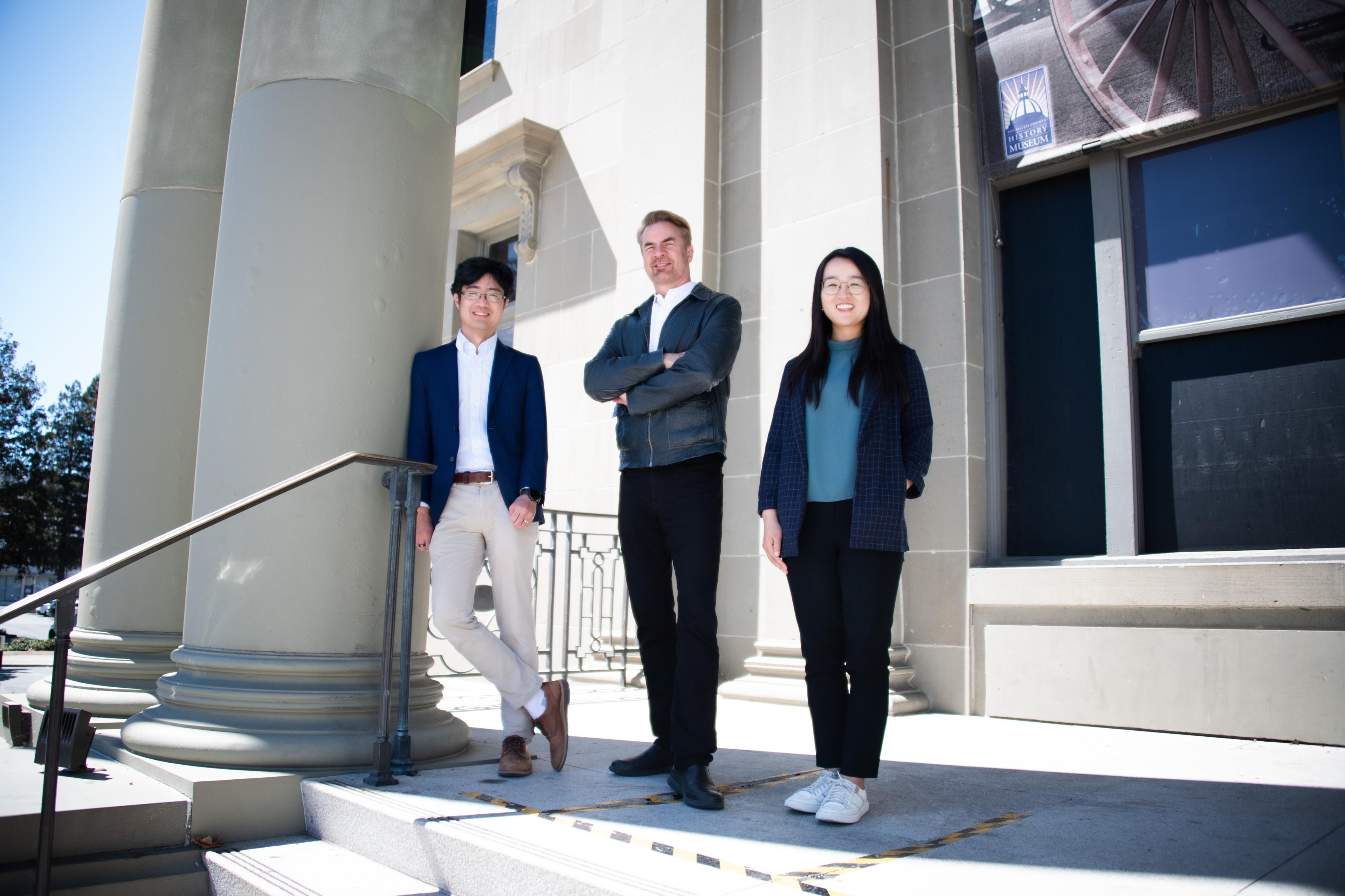
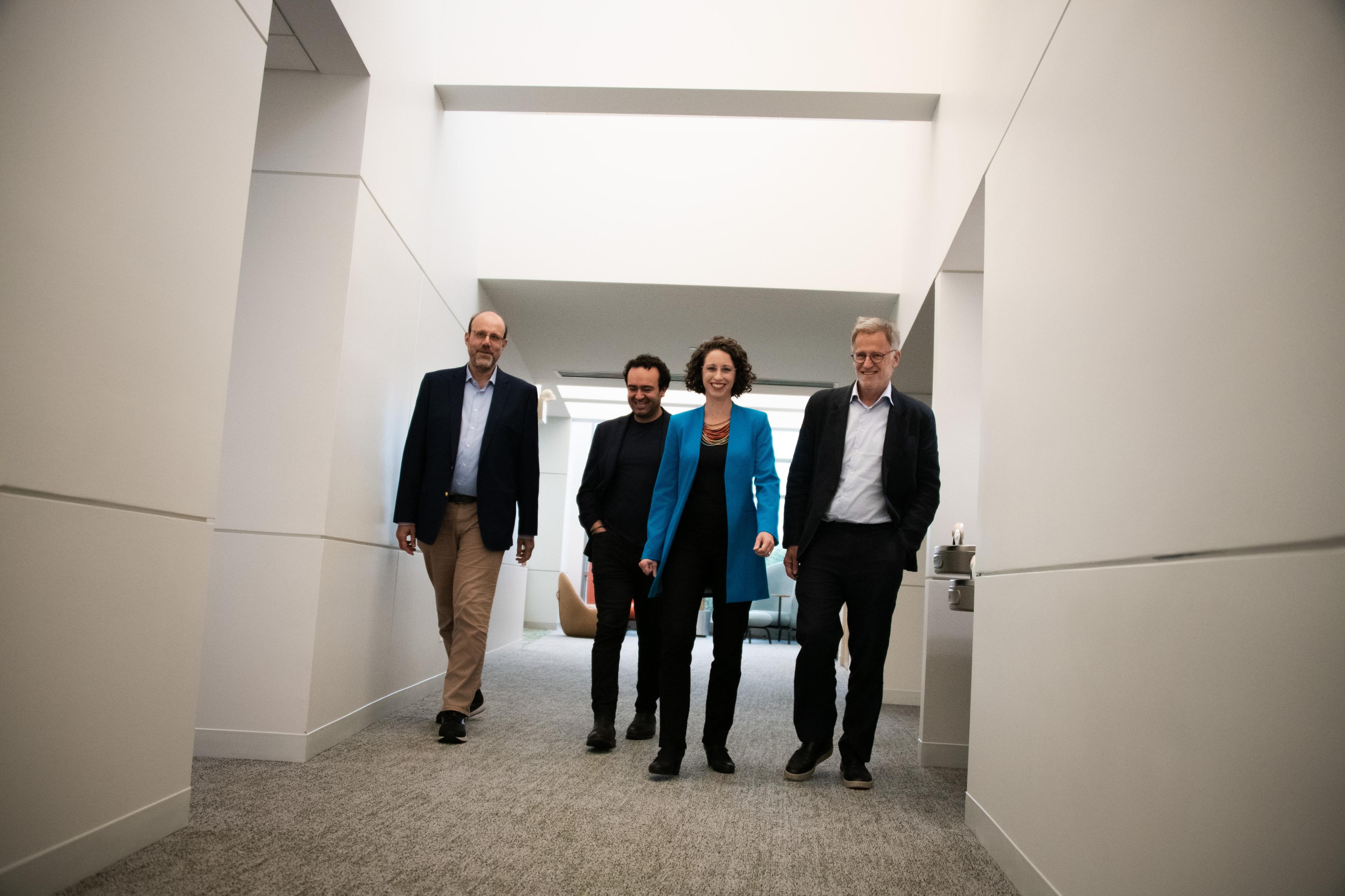
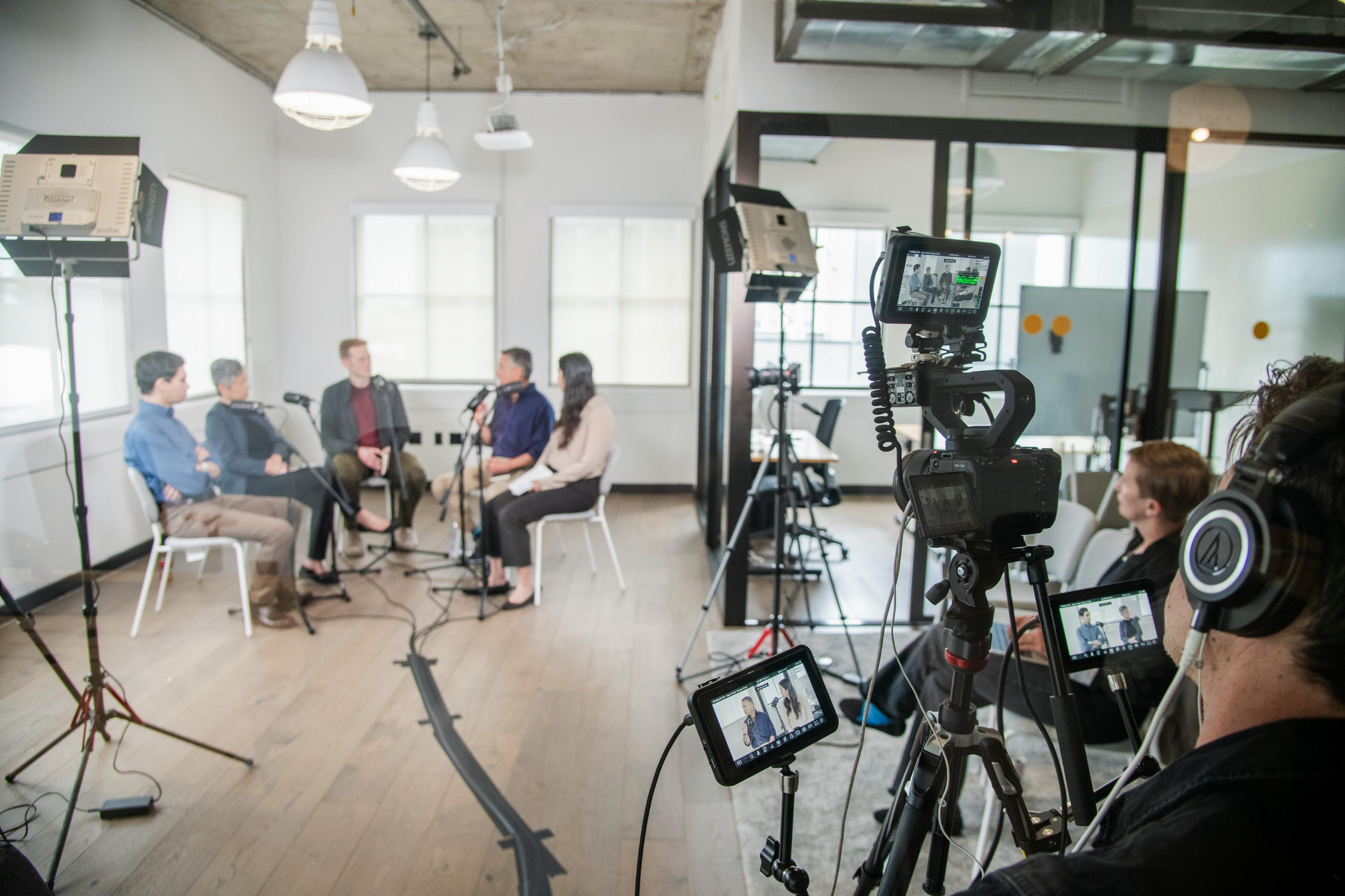
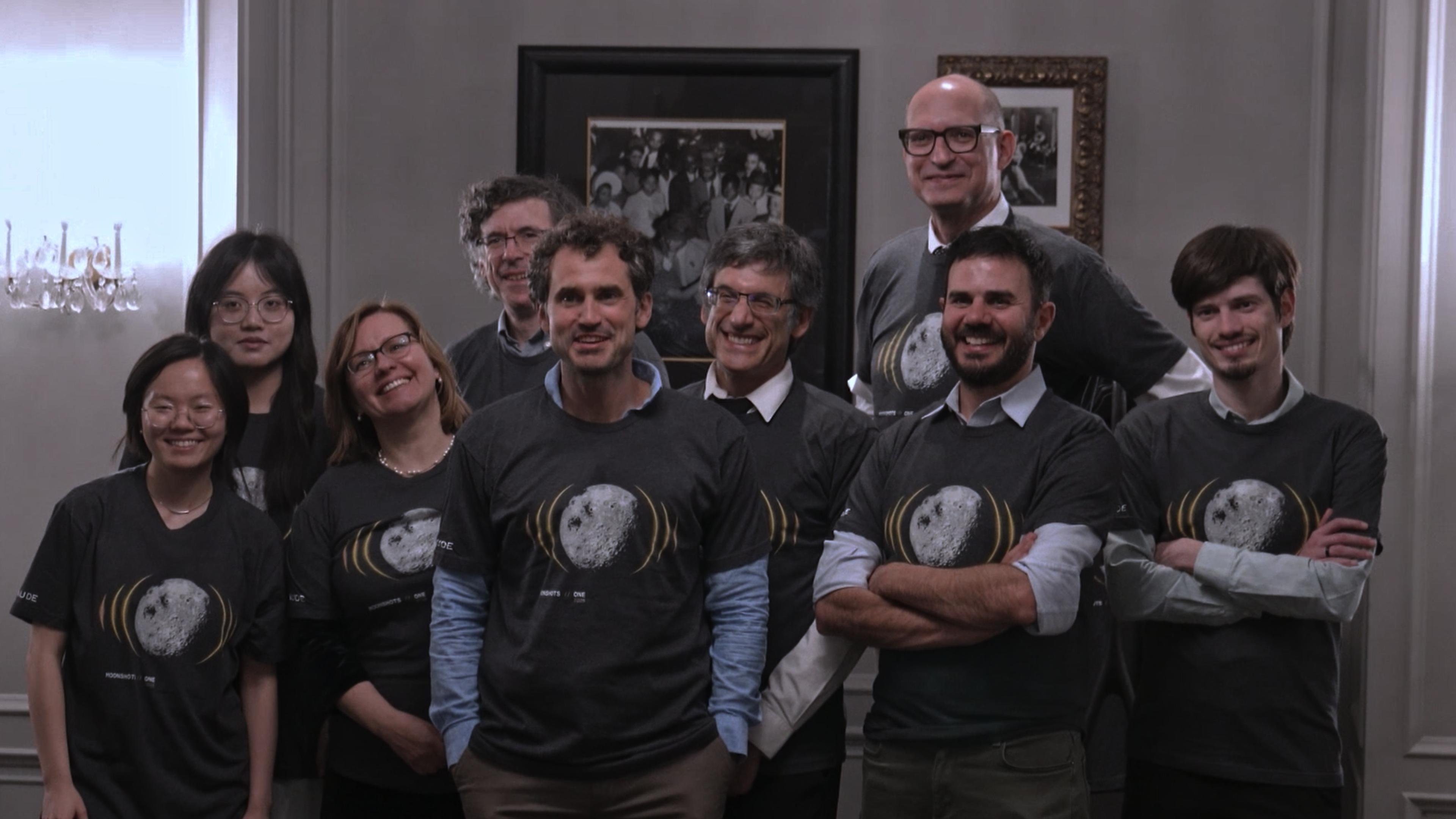
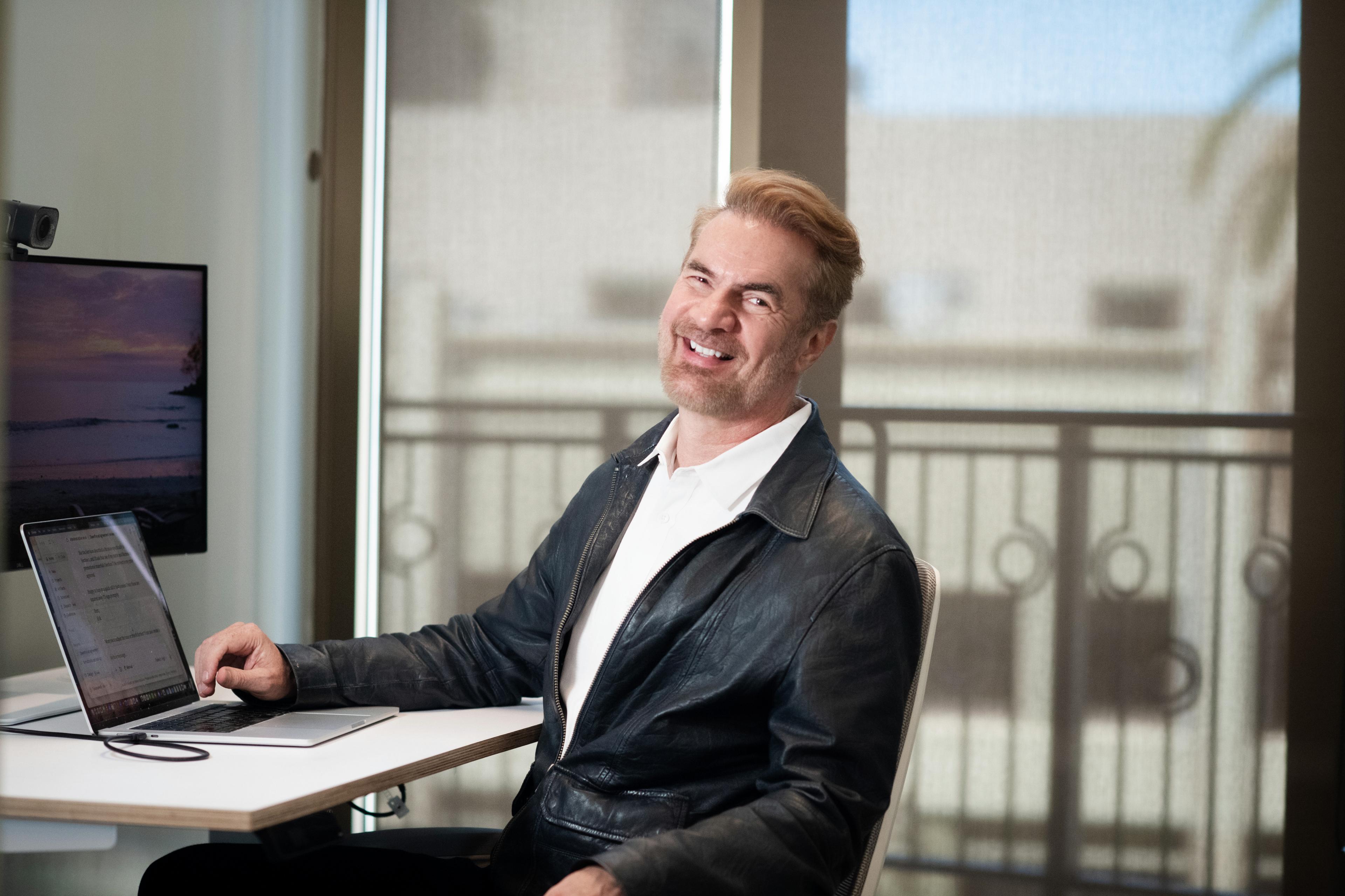
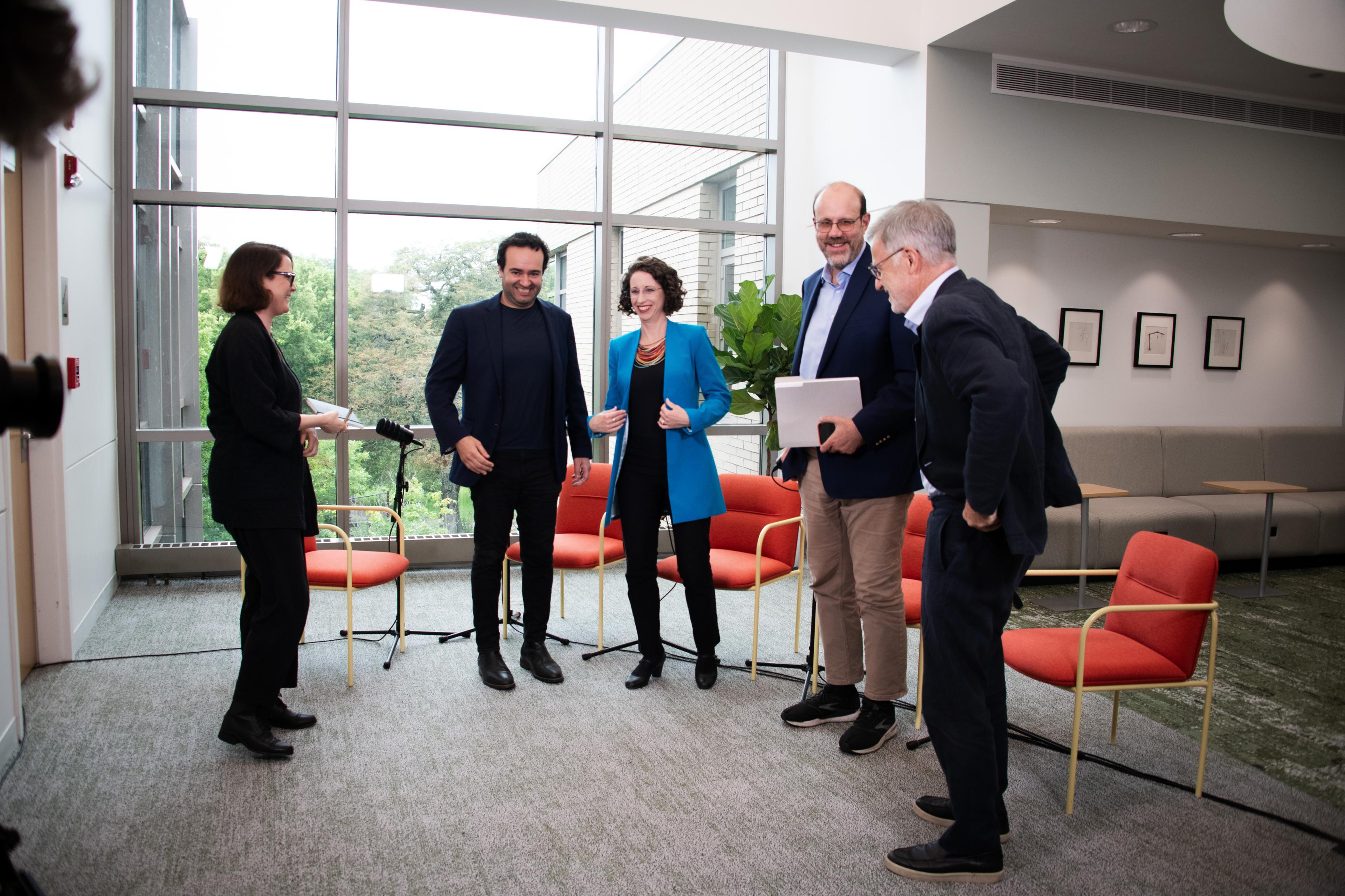
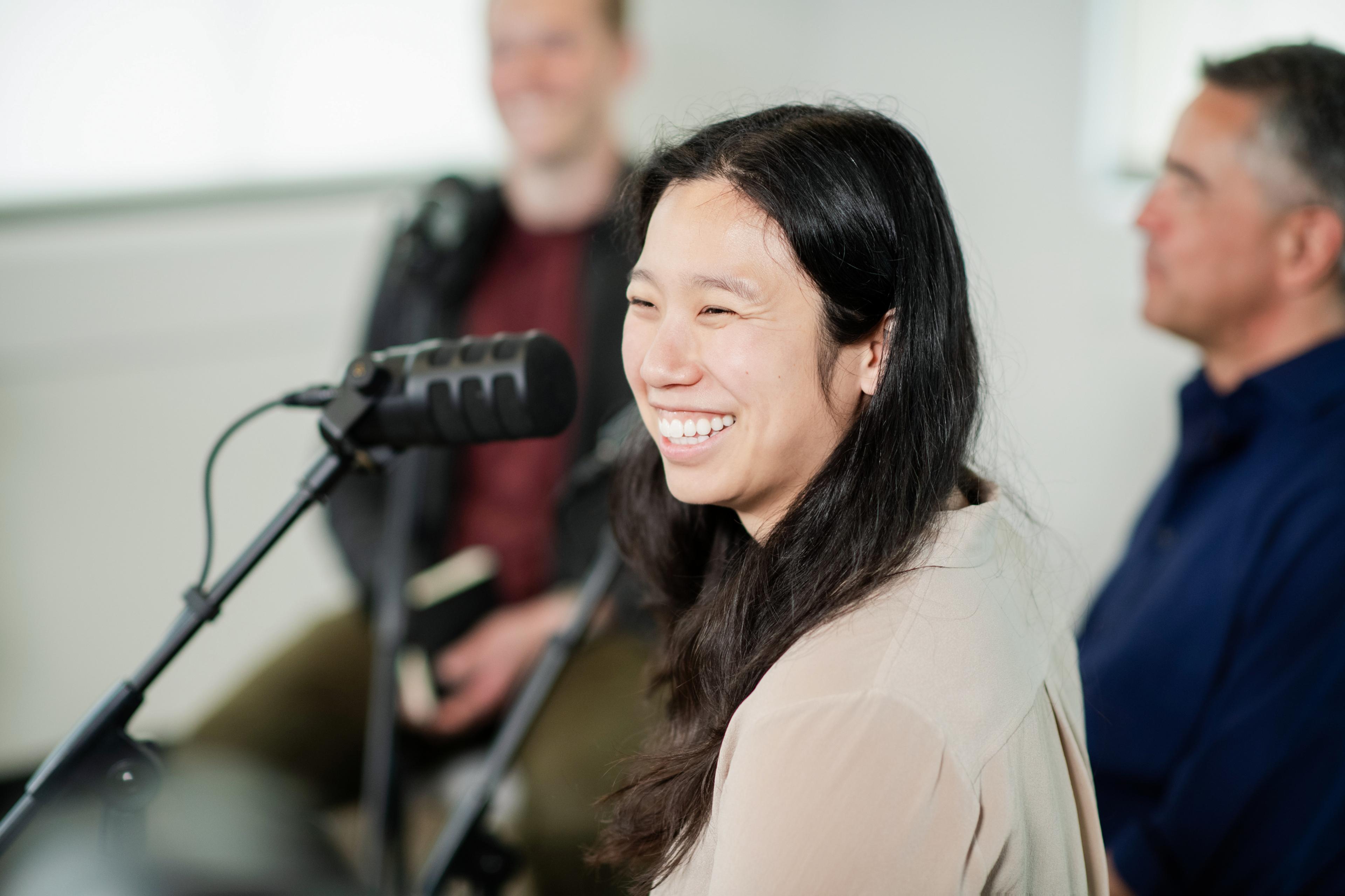
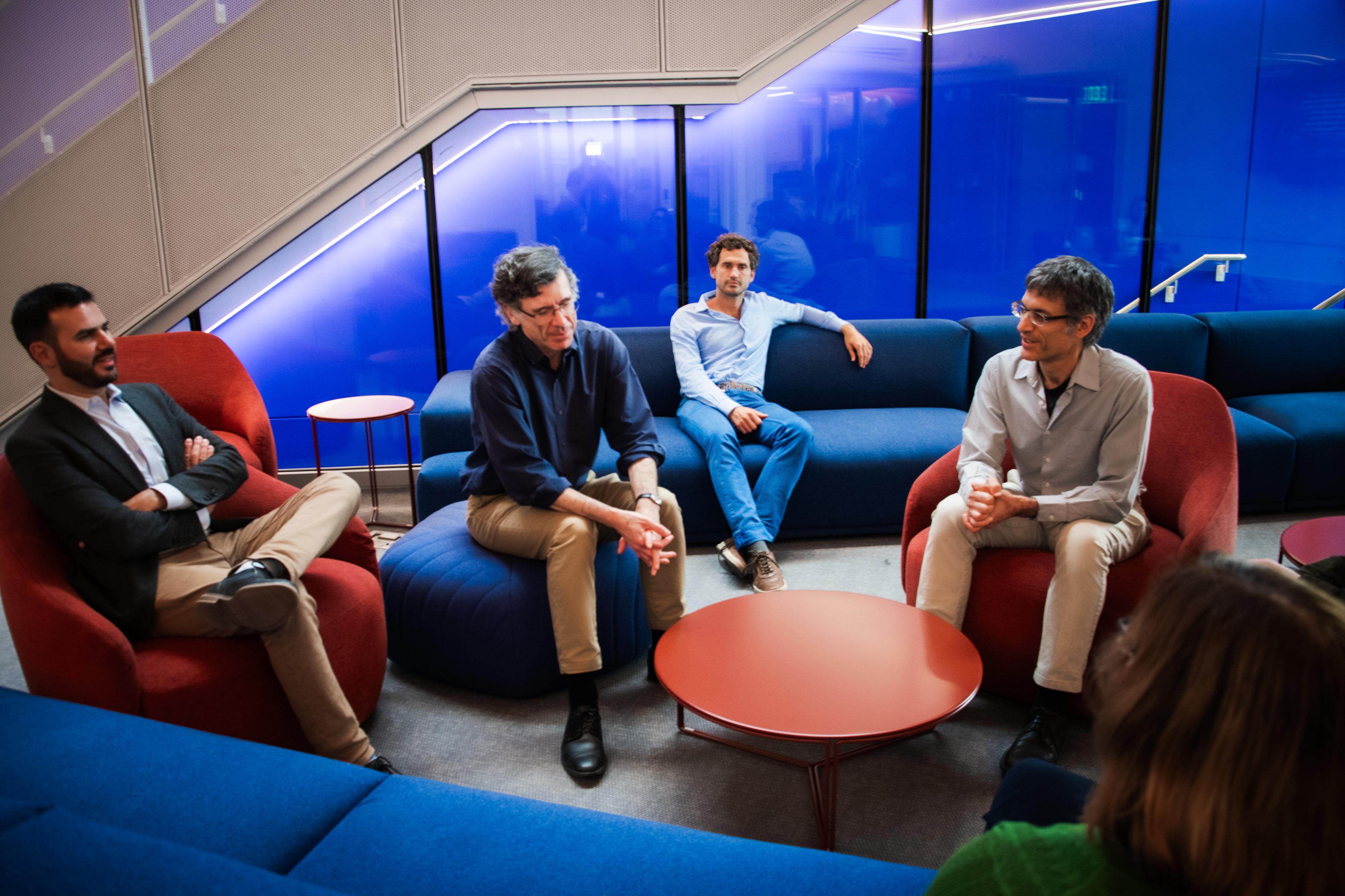
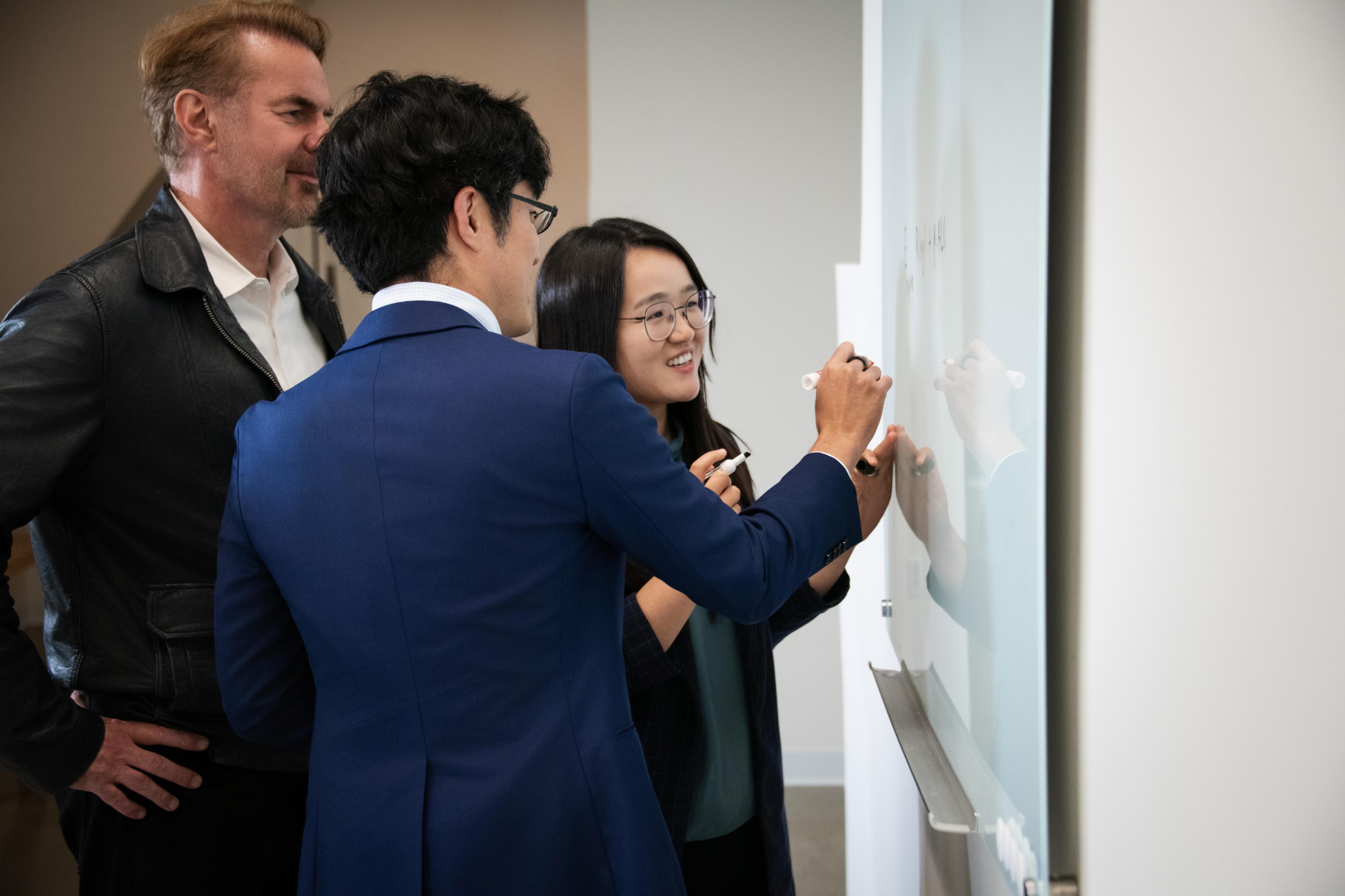
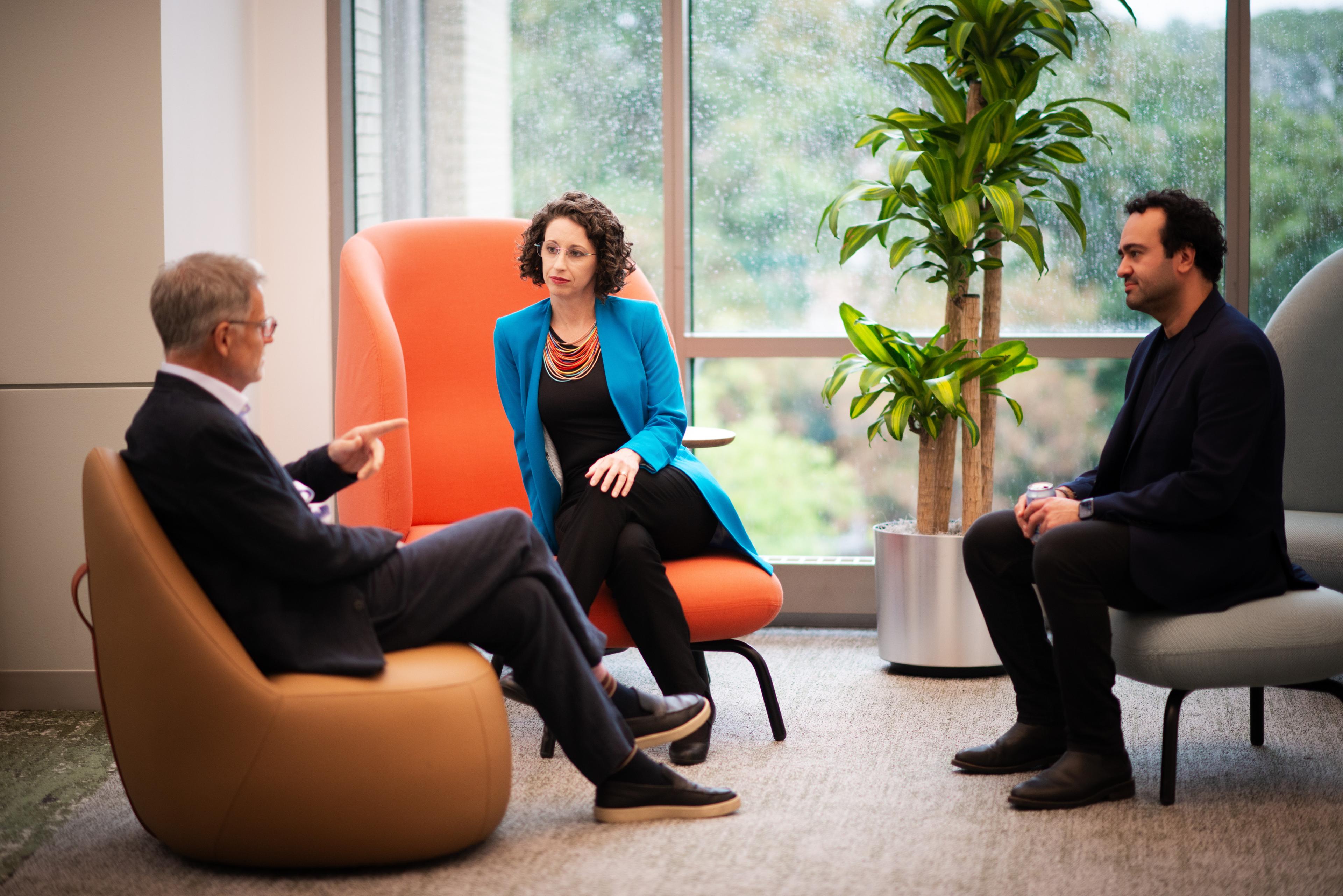
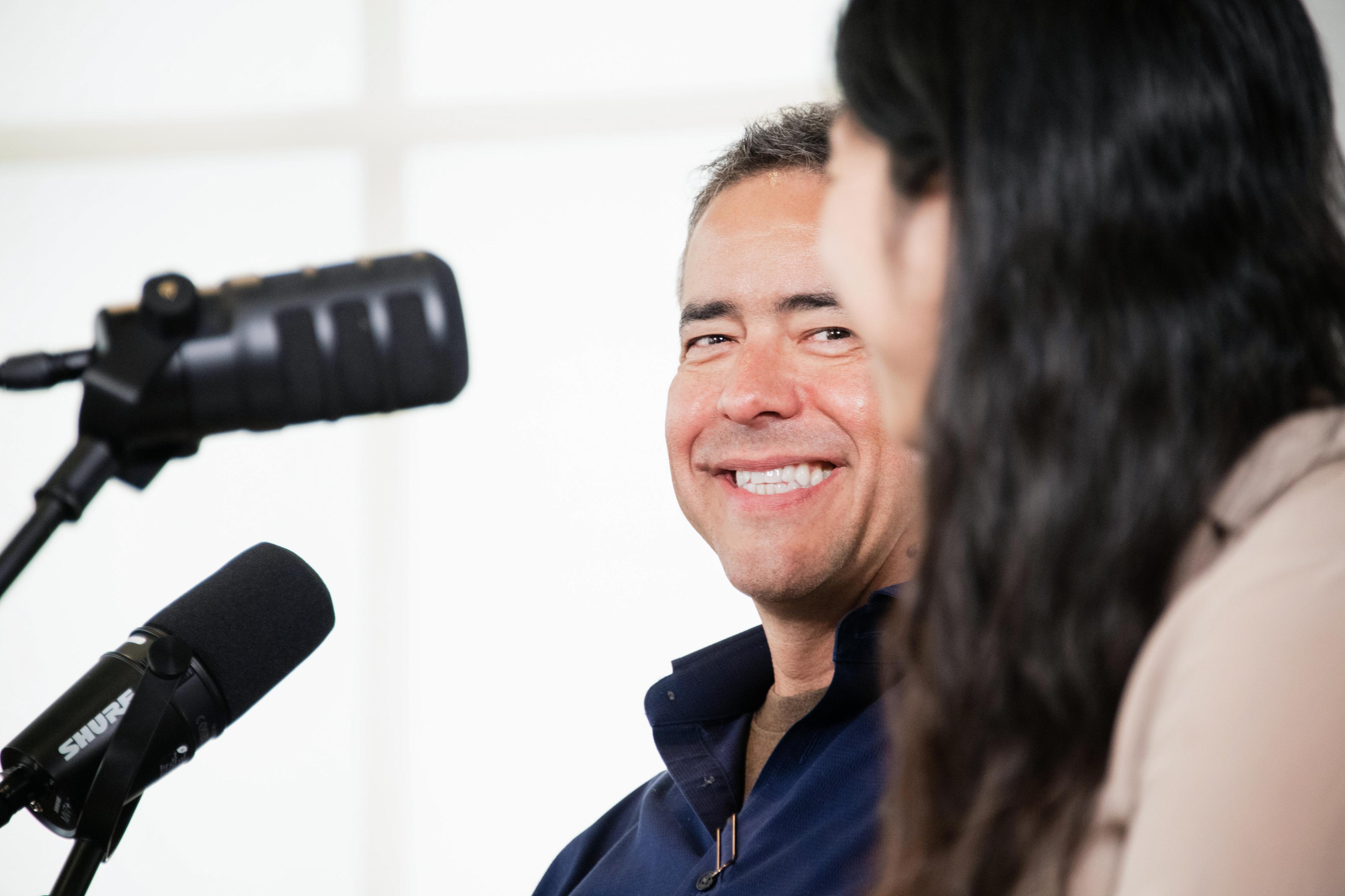
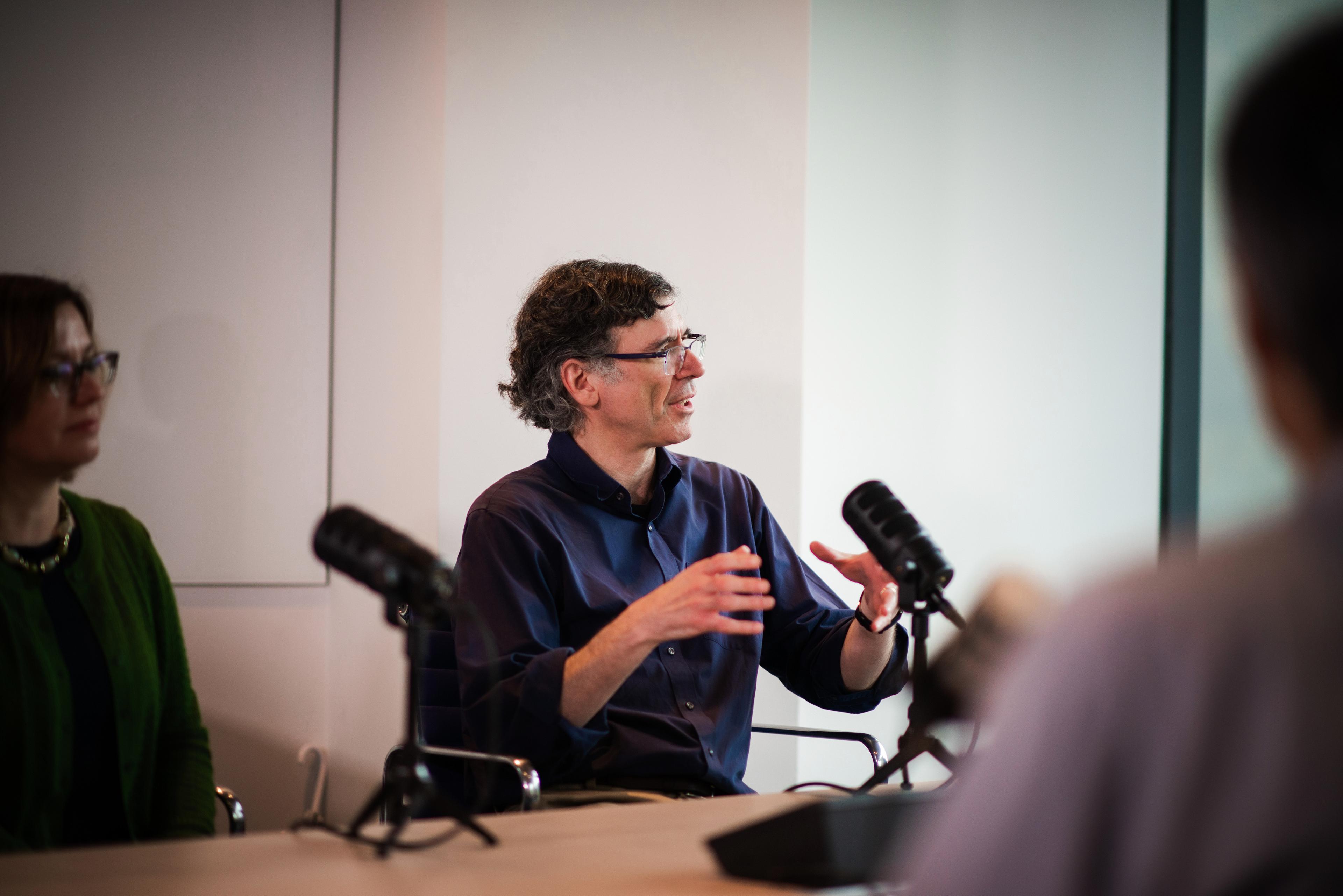
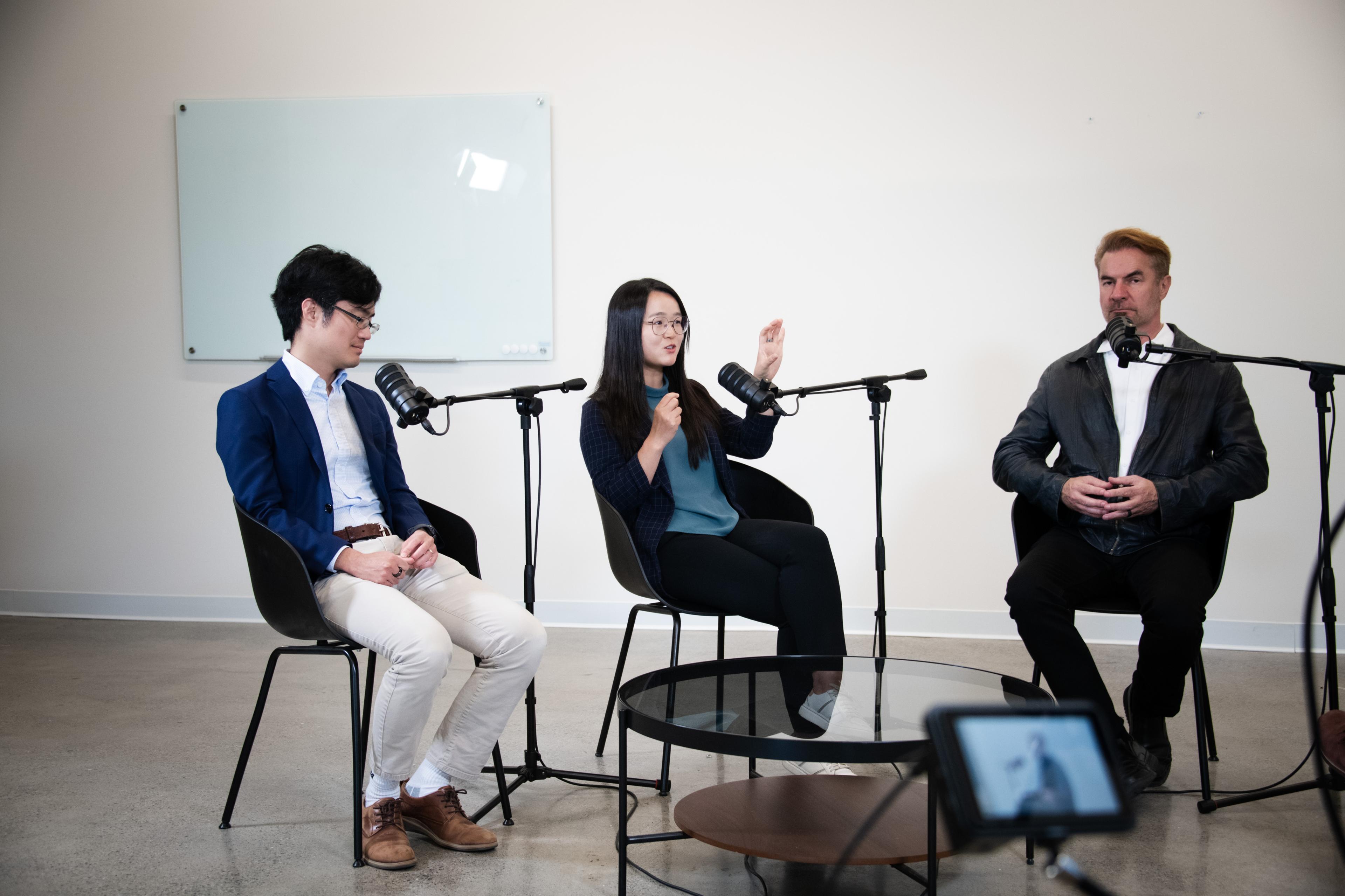
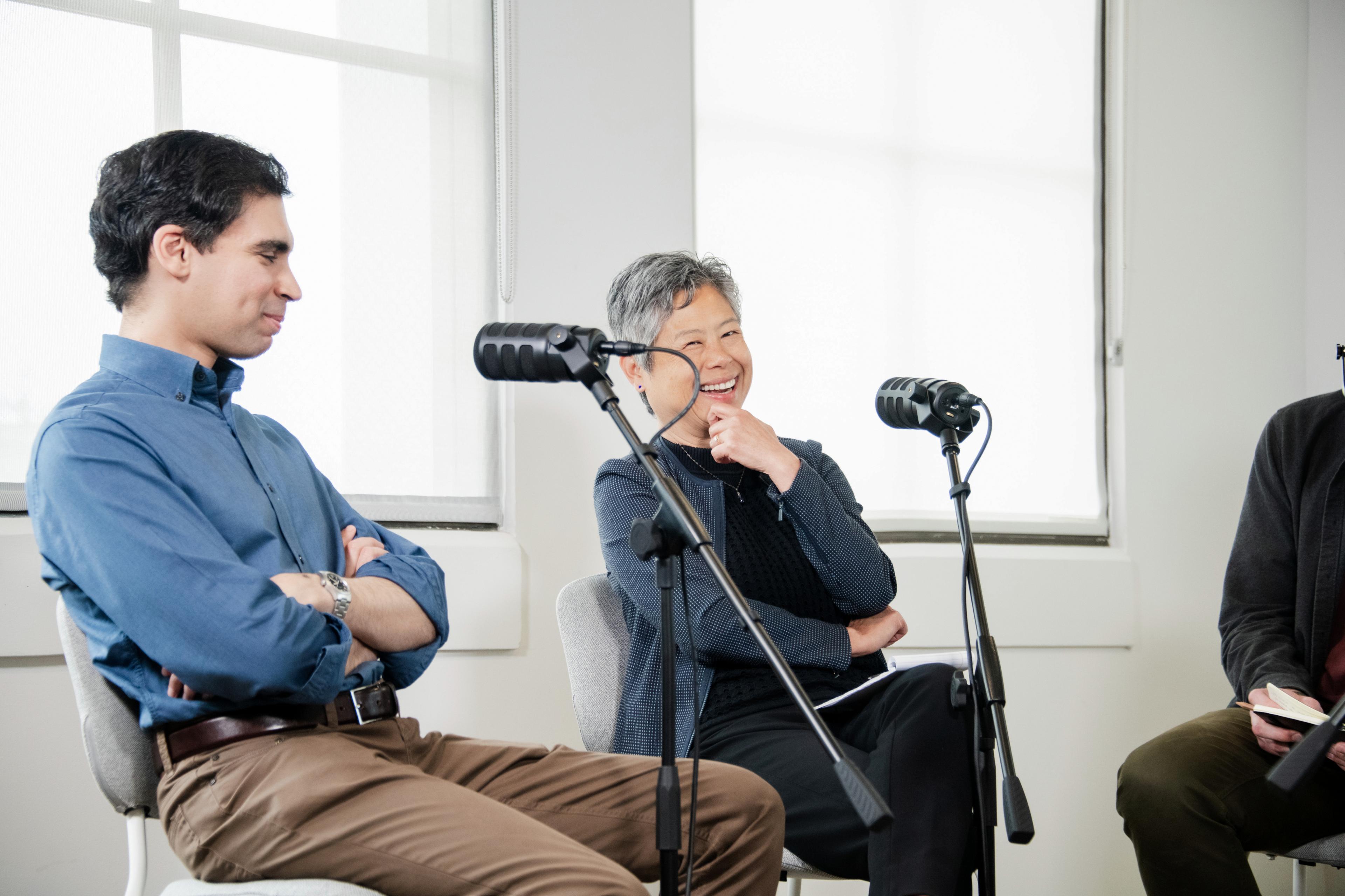
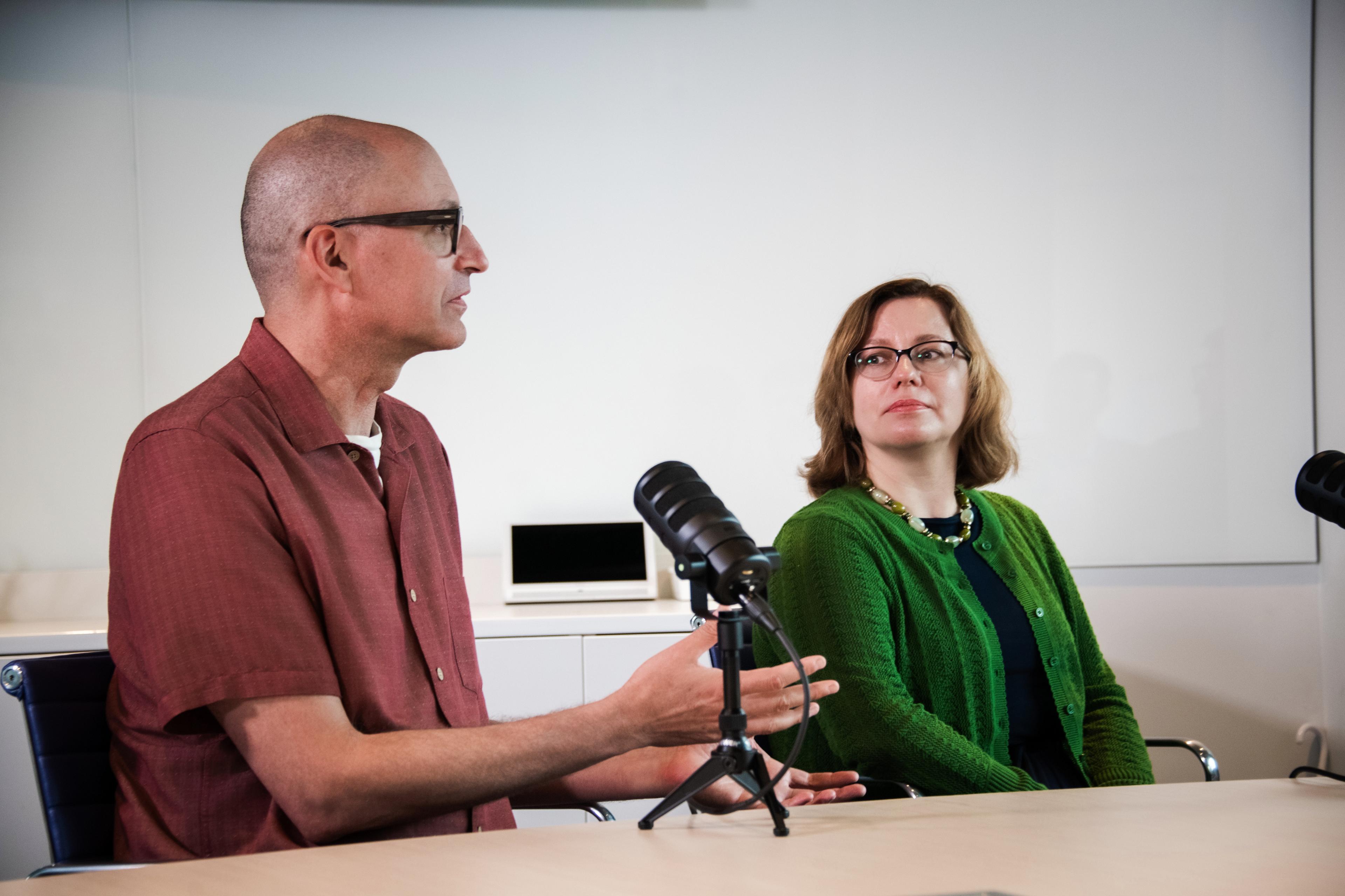
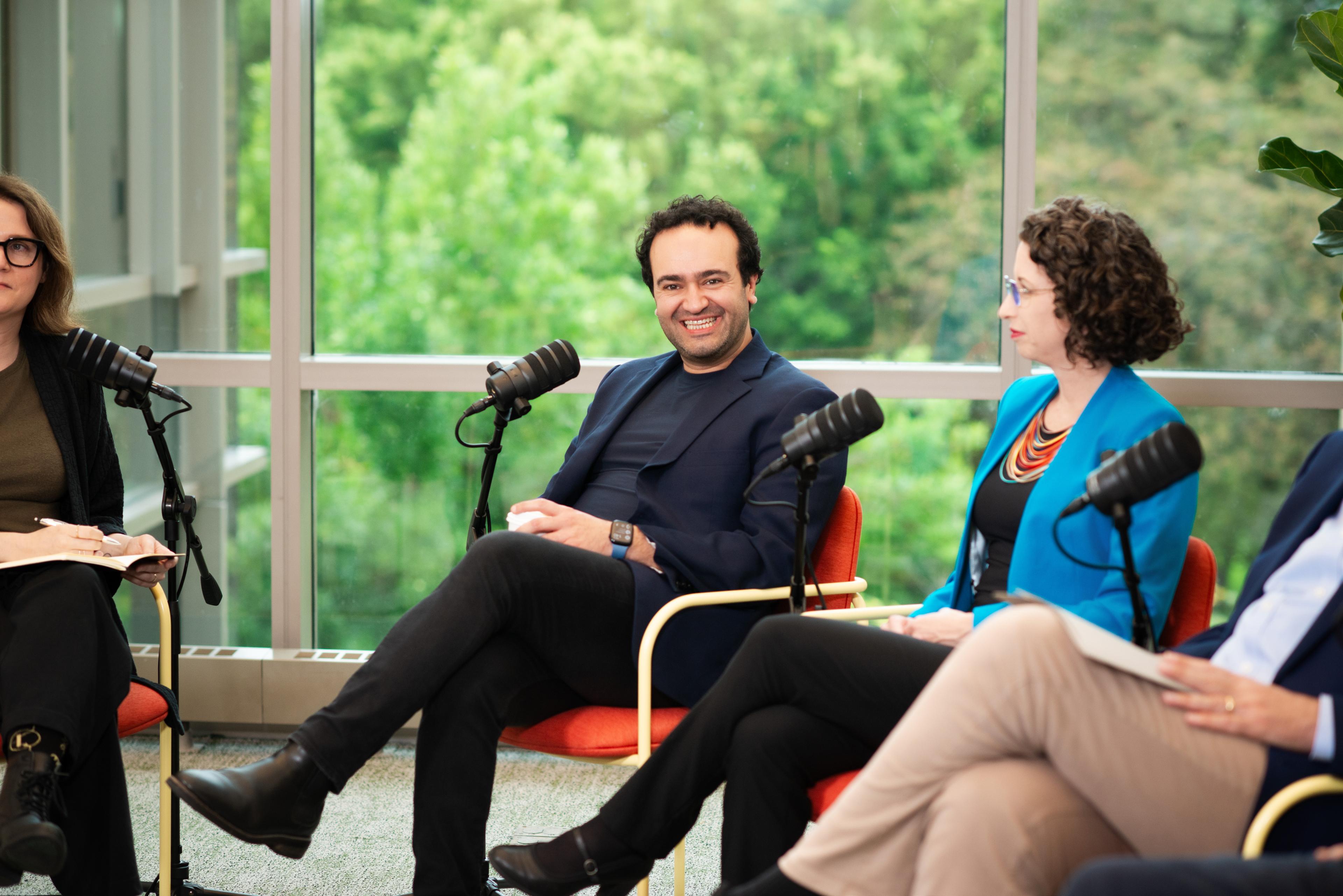
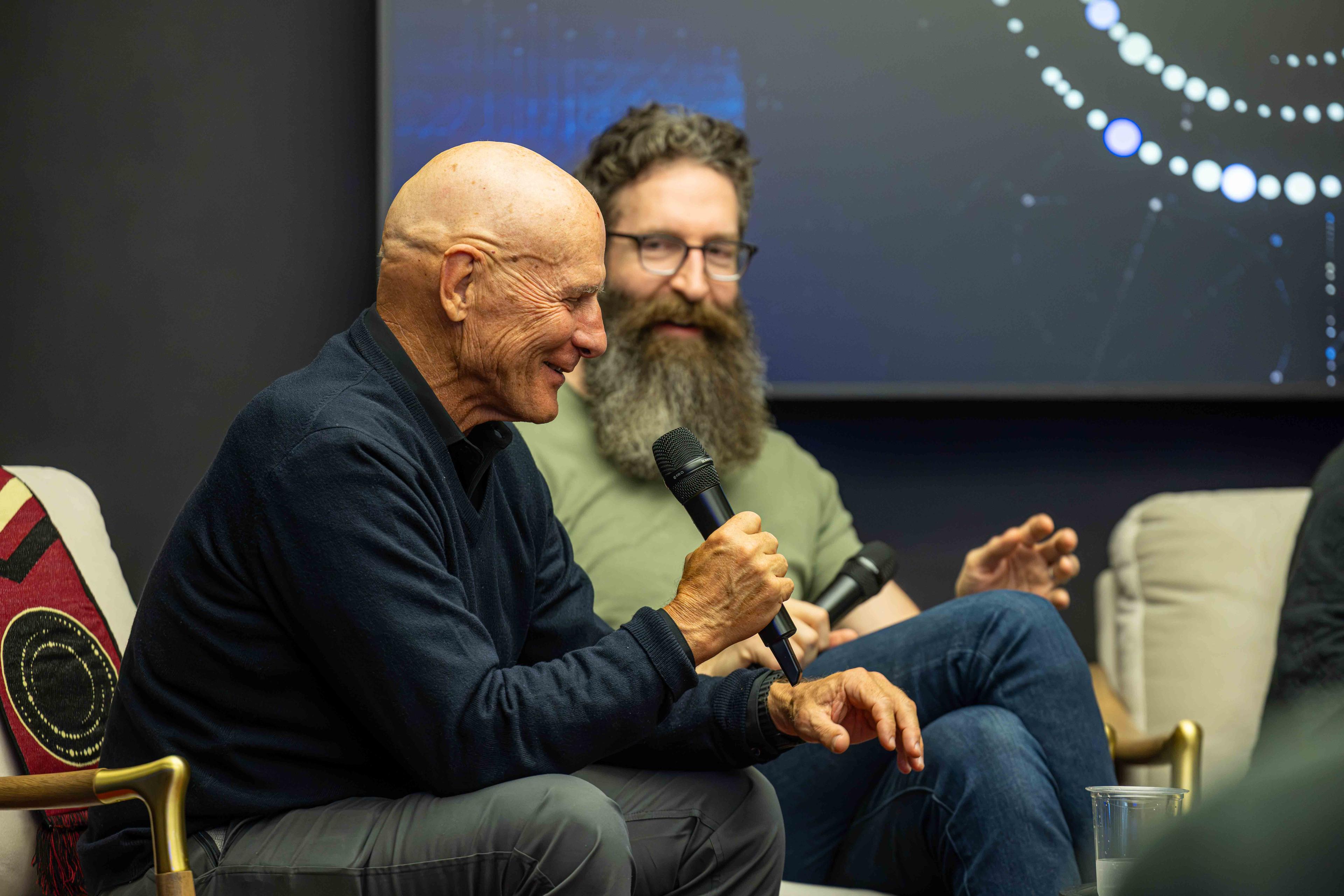
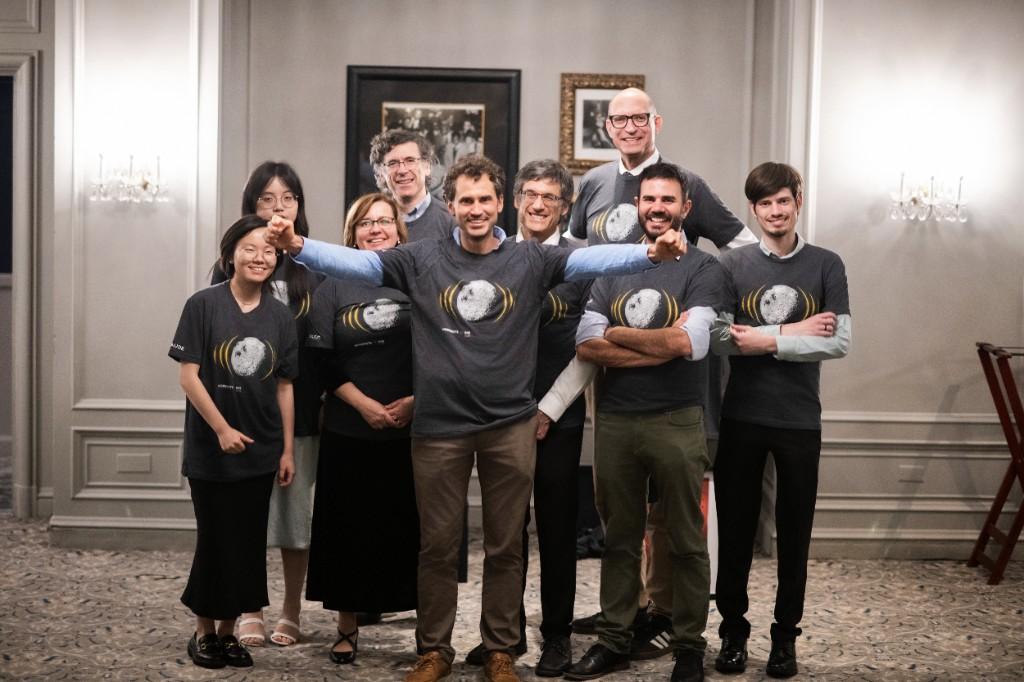
By the time we gathered for the very first Laude Moonshots Awards ceremony last Thursday evening, we had spent the day watching eight research teams defend ideas they had been working on for six months. We had questions about their prototypes, their assumptions, and what they could accomplish with several years and $10 million. They had a great deal to show us.
Over those six months, the teams had clearly bonded. Their momentum and alignment were evident in the demo room. They knew what they wanted to build together and the impact it could make in the world.
That evening in San Francisco, we announced the recipients of the first four Laude Moonshot labs:
- Workforce Reskilling: Stanford University
- Strengthening Civic Discourse: Cornell University
- Advancing Healthcare: UCSF and UC Berkeley
- Accelerating Science: University of Chicago
Each will receive $10 million for a multi-year lab. We selected one winner in each category, and all four decisions were unanimous.
We celebrated with an Academy Awards style dinner. Researchers wore suits that, by their own admission, rarely left the closet. Entire teams came up to accept their awards. It was a good evening to be among researchers working on the future.
A thousand moonshots
Moonshots grew out of the work we began together in early 2024 on Shaping AI's Impact on Billions of Lives. We were trying to identify where computer scientists could do the most good, and what it would take to get them working on those problems.
At the ceremony, Dave recalled the conversation that gave the program its shape:
“We couldn't figure out what was the single moonshot.”
Then Tighe said, “Well, why one? With AI, we can launch a thousand moonshots.”
After much debate, we narrowed to four areas for our first call for proposals: accelerating science, advancing healthcare, workforce reskilling, and civic discourse.
The response was 125 proposals from more than 600 researchers across 47 institutions. Eight finalist teams received $250,000 apiece and six months to build something, test their ideas, and make the case for a lab. We also awarded seed funding to a runner up in each category and 13 honorable mentions.
The selection committee included computer science legends like Jeff Dean, John Jumper, John Hennessy, Yejin Choi, Eric Horvitz, and Thomas Wolf, alongside experts in economics, medicine, and civic institutions. Their questions reached well beyond whether the technology could work. Who would use it? What would have to change for it to help someone? How would we know?
The model for an impact lab is demanding and practical: choose a very hard problem, bring together people with different expertise, talk to the people who might use what you build, and give the team the resources and time to prove something. The aim is impact, not just papers.
Last Thursday, the teams came back with answers, working systems, and a much clearer view of what they wanted their proposed impact labs to ship.
Helping people learn as work changes
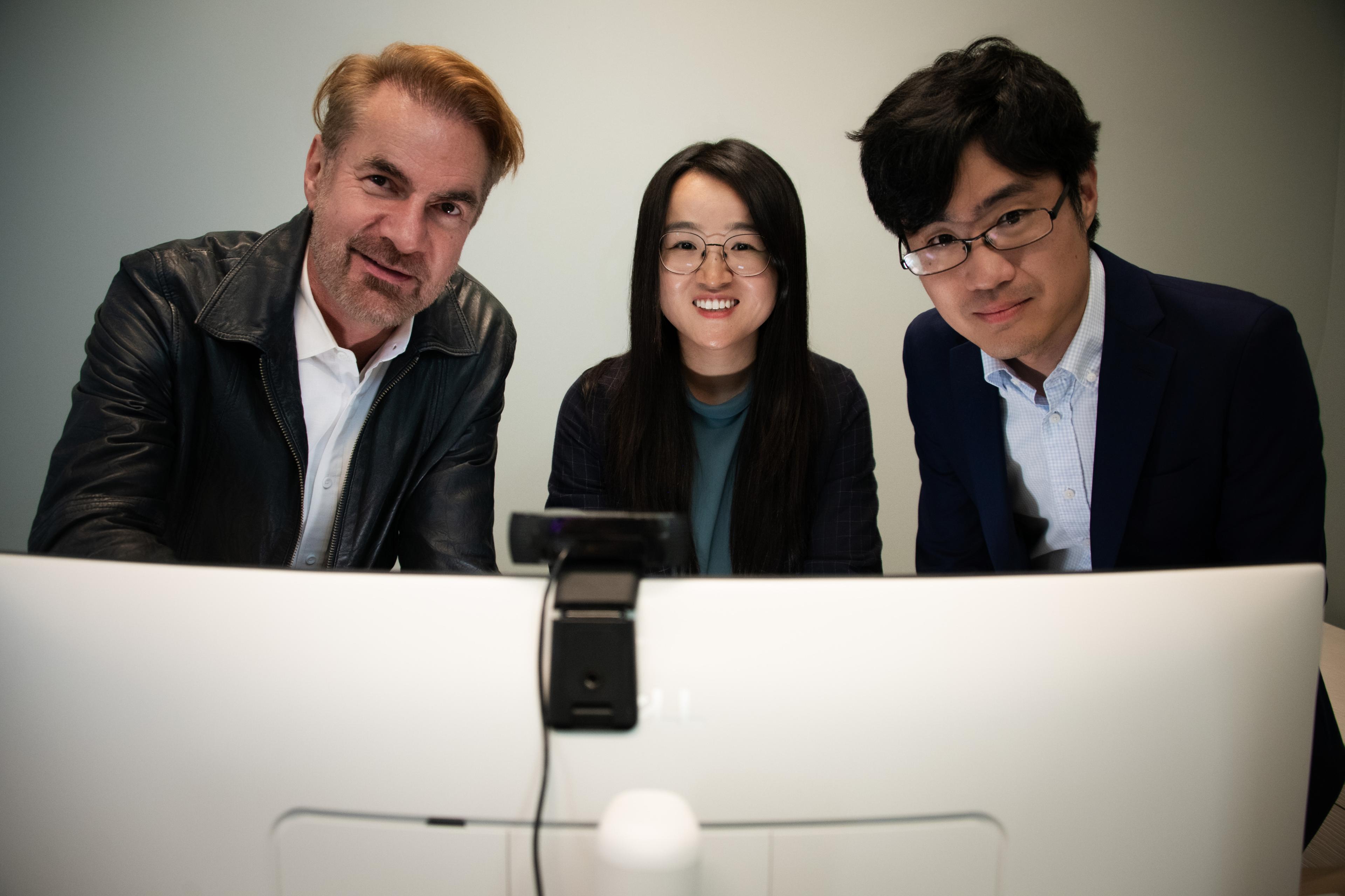
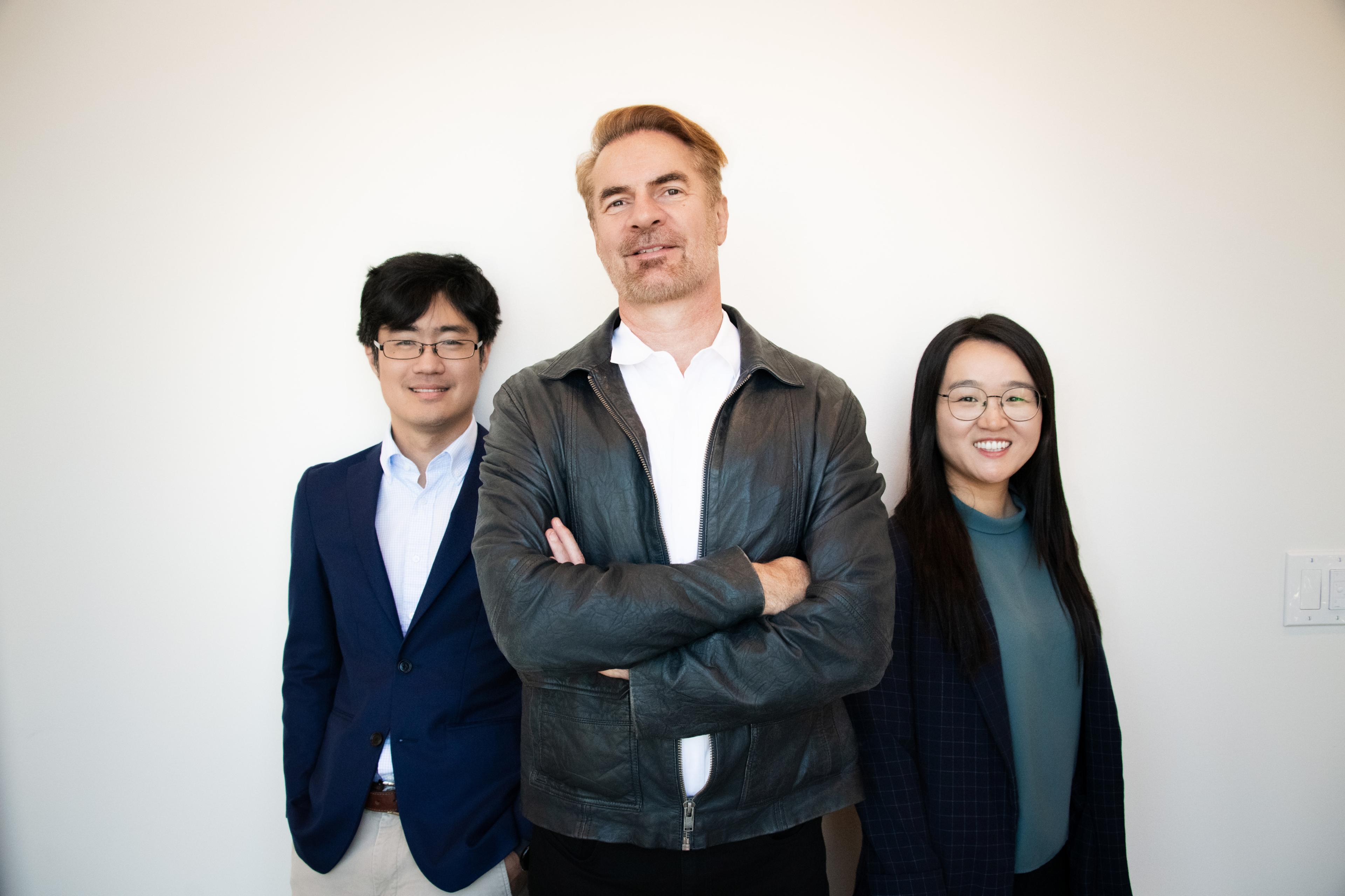
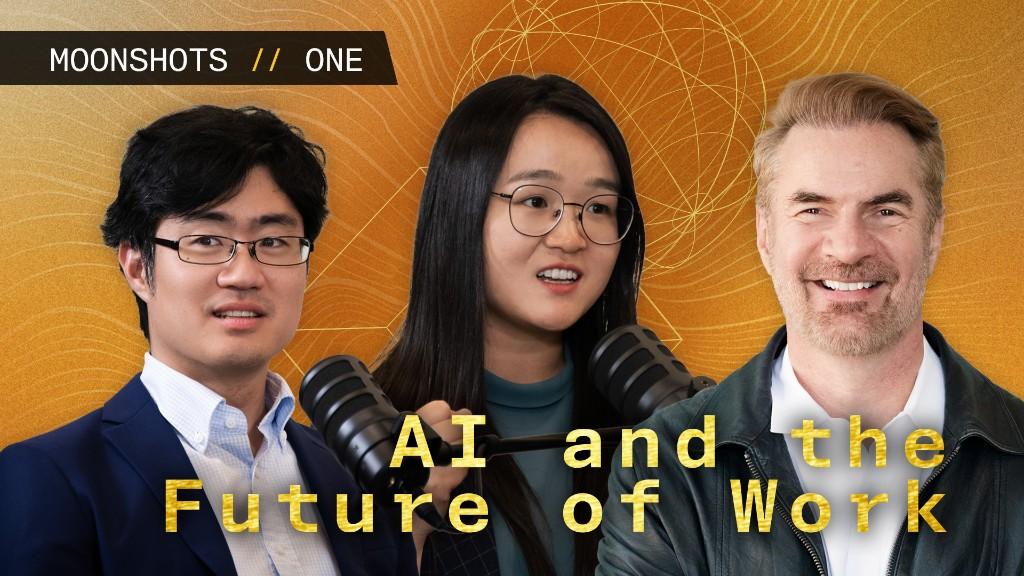
Stanford's Collaborative Intelligence for the Future of Work takes on a question that is becoming urgent for workers, employers, and educators: how can AI help people acquire the skills they will need next?
Diyi Yang, Tatsunori Hashimoto, Chris Piech, and Erik Brynjolfsson are combining detailed measurement of changing work with the design and evaluation of systems that help people learn. Partnerships with payroll providers will help them track where jobs are emerging and how demand for skills is changing. Their broader research spans human-AI collaboration and the incentives that determine whether tools are built to develop people's capabilities.
During her acceptance remarks, Diyi described how the program had pushed the team beyond the kind of proposal they might ordinarily write. They had begun thinking more ambitiously about what their research could change, including whether AI tools could become better teachers. The lab gives them the opportunity to pursue these questions and measure what actually helps workers.
Giving communities a say in how AI shapes conversation
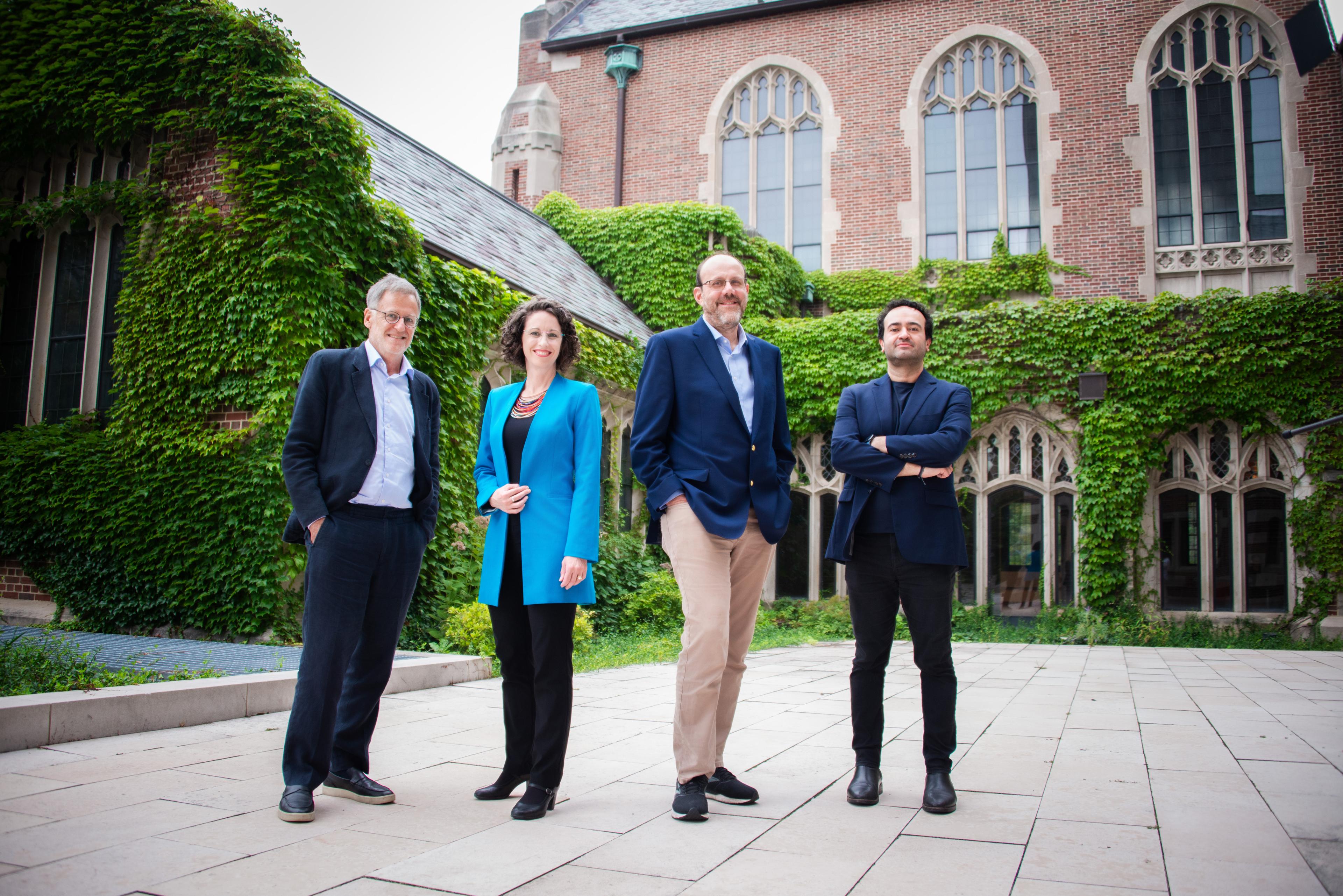
AI systems increasingly influence what people read, how they express themselves, and which conversations they encounter. Communities need ways to set rules for those AI systems and check whether the rules are being followed.
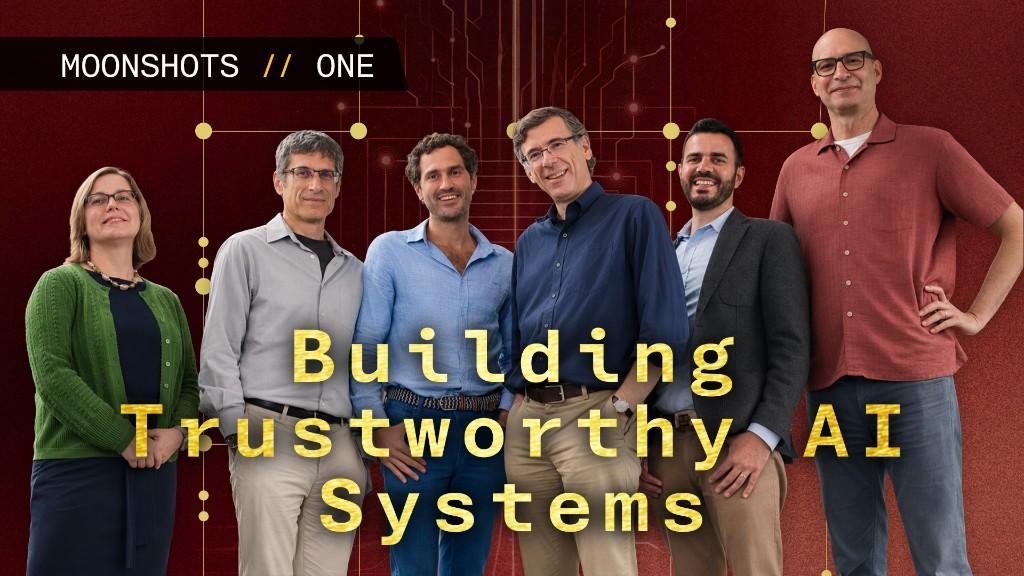
Cornell's team is building that infrastructure. Cristian Danescu-Niculescu-Mizil, Natalie Bazarova, Jon Kleinberg, Robert Kleinberg, Mor Naaman, and David Rand combine expertise in algorithms, cryptography, communication, and human behavior. The team has already built tools that empower communities to develop and deploy AI in their own spaces, infrastructure for evaluating its effects on conversations, and several independent auditing prototypes, as well as an auditing benchmark to encourage further research in this area.
The aim is to make the spaces where people disagree, debate, and decide together more trustworthy.
Healthcare between appointments
People live with their health conditions every day. Their care teams often see only what happens during an appointment.
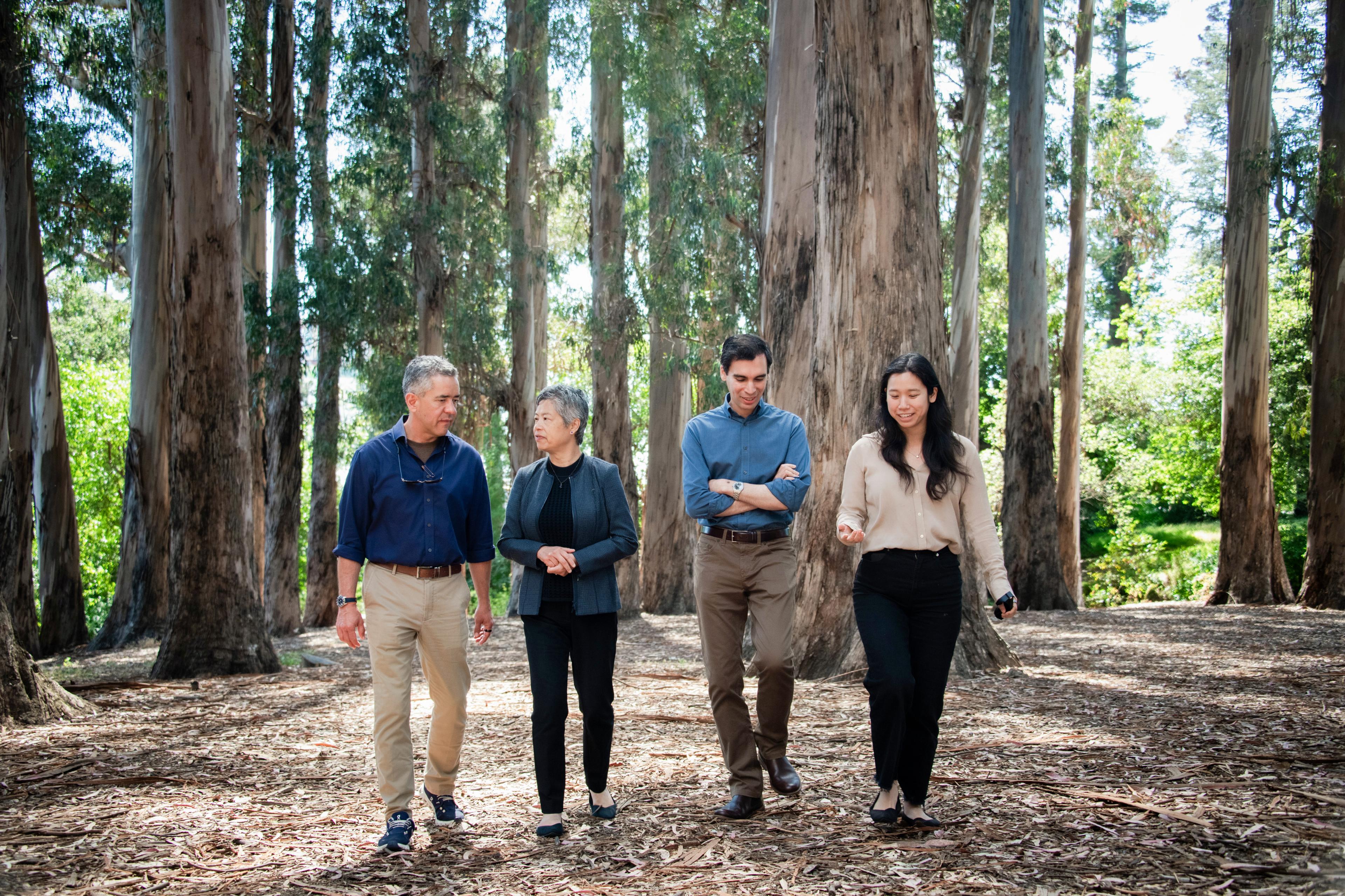
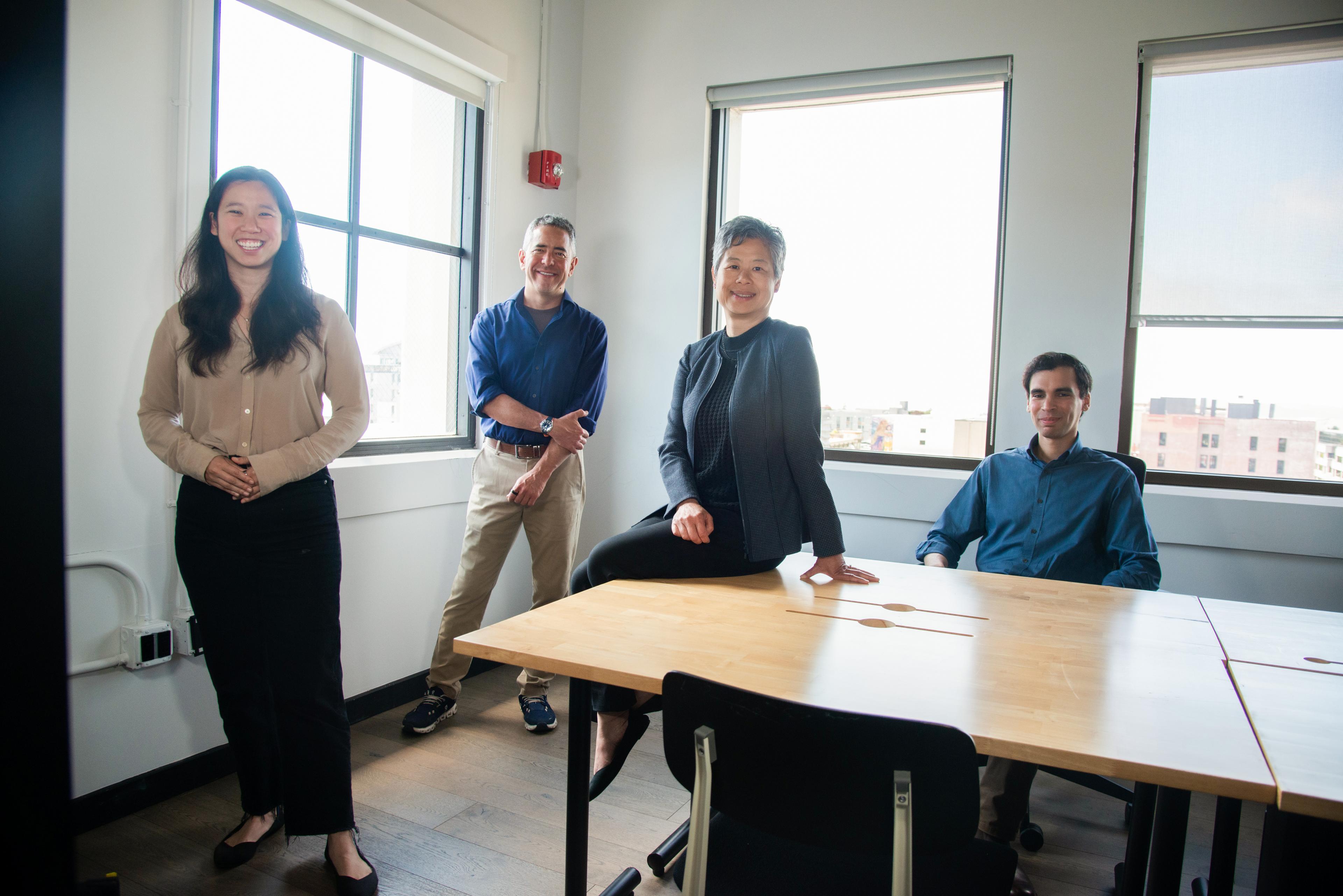
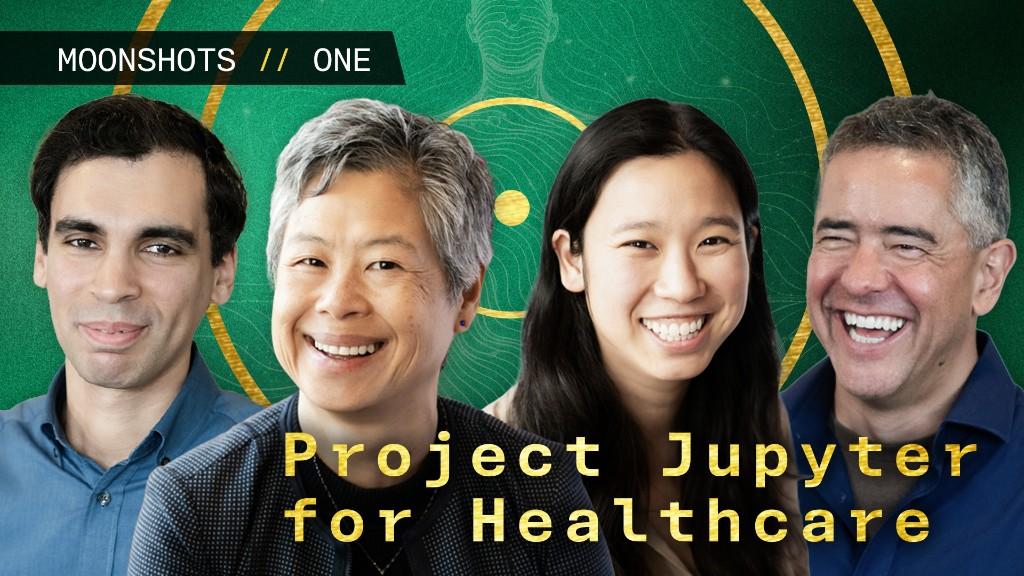
JupyterHealth, from the joint UCSF–UC Berkeley Computational Precision Health program, is building open infrastructure to connect those two realities. Ida Sim, Ahmed Alaa, Irene Chen, Jessilyn Dunn, Sandeep Kishore, Fernando Pérez, Maya Petersen, and JP Pollak are bringing together data from wearables, medical records, and other sources so researchers and clinicians can develop tools that respond to what happens between visits.
The team draws on the experience of Project Jupyter, whose open-source tools have become part of how science gets done. Applying that approach to healthcare could give many more researchers and engineers a common foundation for building, testing, and improving care.
Forecasts that help people make a living
A farmer deciding when to plant needs a forecast that is useful for that decision, in that location, early enough to act.
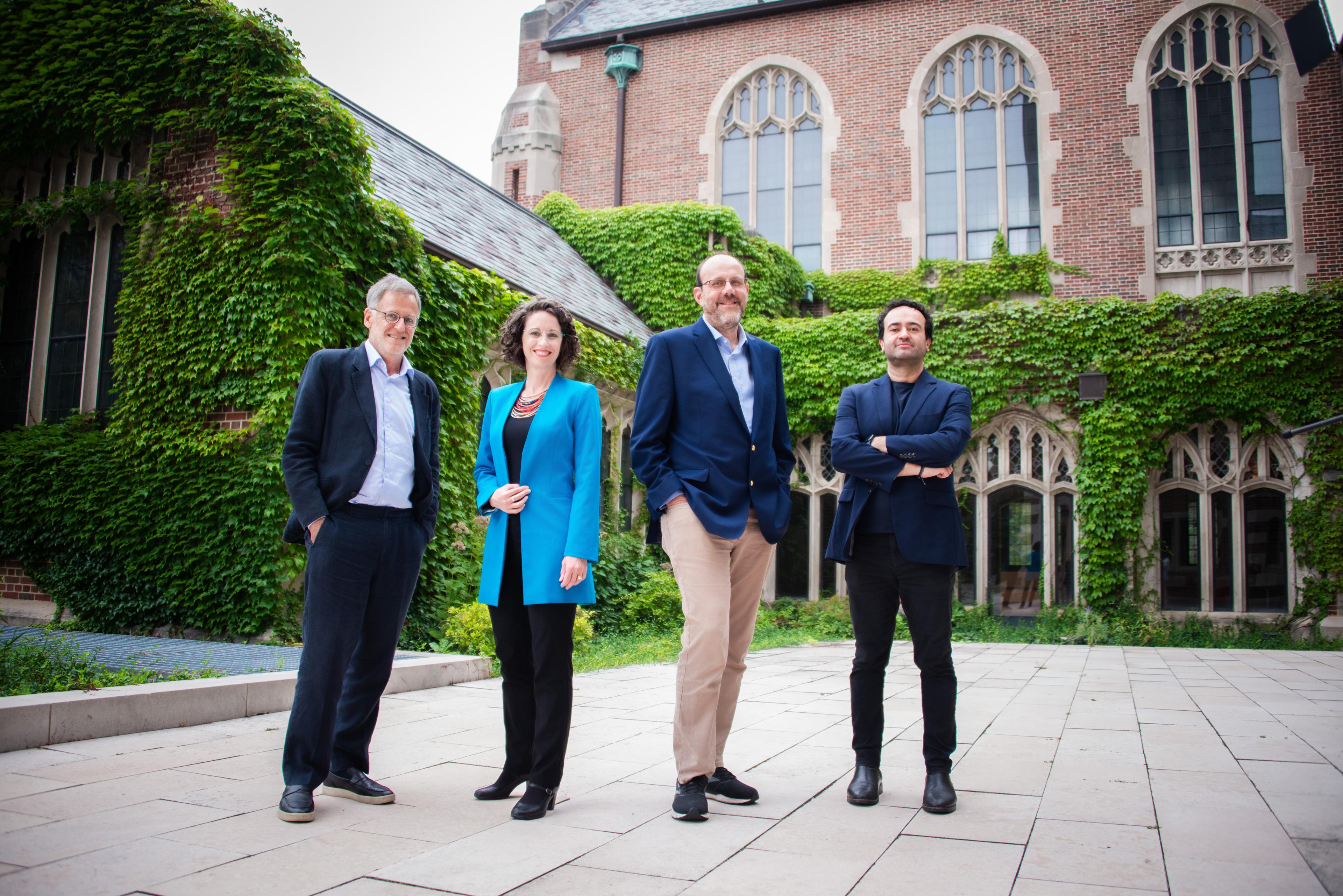
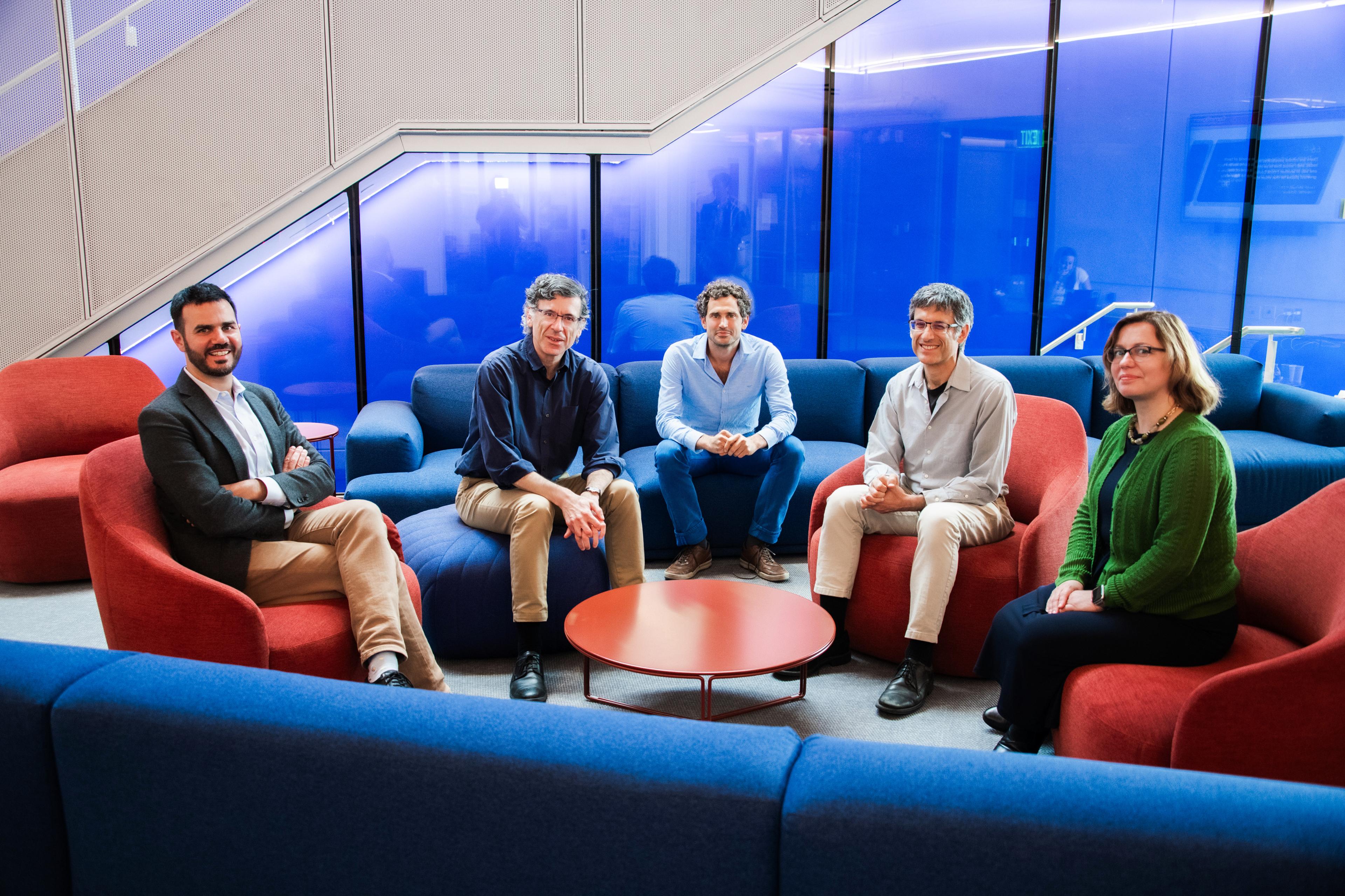
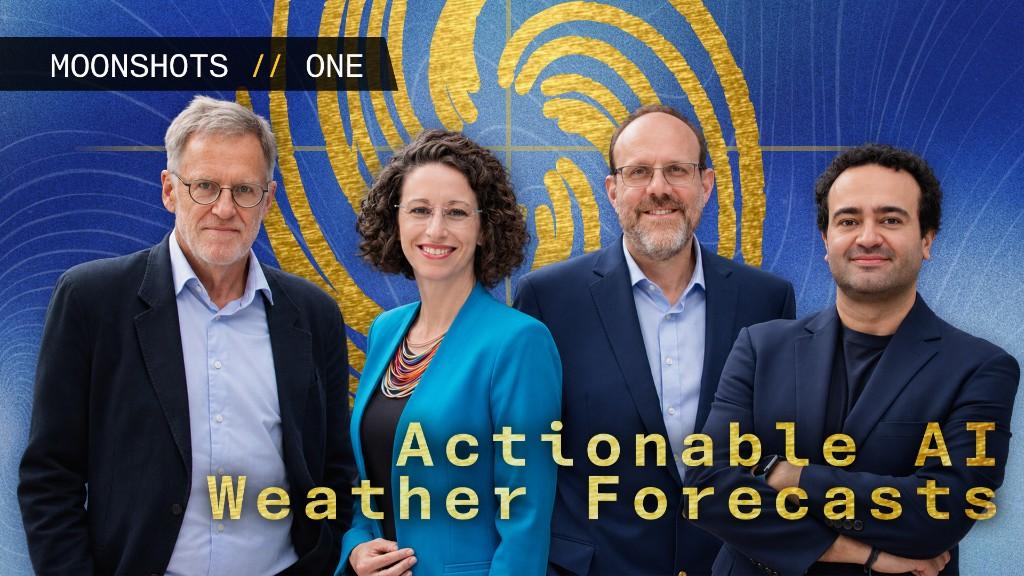
The University of Chicago team is developing AI weather forecasting for regions where reliable local information can be scarce. Rebecca Willett, Ian Foster, Pedram Hassanzadeh, and Michael Kremer bring together expertise in AI, climate science, computing, and economics.
They are building around the needs of farmers and public health workers: answering questions like when the monsoon will arrive and how much confidence to place in a prediction. The lab will connect advances in forecasting with the research and software needed to make those forecasts useful to communities too often left out of technological progress.
From $10M to $40M
When we launched Moonshots // ONE, Laude committed to funding one $10 million lab. After we selected the eight finalists, NSF and a group of fellow technologists joined us, making it possible to back a team in every category.
The National Science Foundation's Directorate for Technology, Innovation, and Partnerships (TIP) committed $17 million to help fund labs in science, workforce reskilling, and healthcare. The program inspired NSF to try something unusual: put federal resources behind teams chosen through Laude's selection process, with the agency's own rigorous external review testing the strength of the approach and the research.
Joda Thongnopnua, special advisor for TIP, joined Andy Konwinski, Dave Patterson, Braden Hancock, and Ben Gomes as judges on Demo Day. During his awards ceremony remarks, he shared that an external reviewer, a former NSF program director, had called the Moonshots // ONE proposal the best they had read during their time at the agency.
// National Science Foundation
“As the pace of science accelerates, we are excited to partner with computer science luminaires and proven entrepreneurs at Laude Institute to identify and select a range of teams working on the next big moonshots that could transform science, health, and education in our nation,” Erwin Gianchandani, NSF Assistant Director for Technology, Innovation, and Partnerships told us. “The selected teams reflect the thoughtful process and powerful vision of our partners, but also the ambition and sense of purpose of some of our novel frameworks, like the recent NSF X-Labs initiative, to identify the next generation of transformative builders who will drive innovation forward and create the future.”
For NSF, this was a chance to help promising research move faster and learn from a different approach to funding it. For the teams, it meant three more labs could get to work.
Alongside NSF and Laude, individual philanthropic gifts from Jeff Dean, Sanjay Ghemawat, John Hennessy, Ben Gomes, and Dave Patterson complete the funding of these four labs. These are people who have helped build modern computing and know how much of it began in universities. As Ben said during the awards ceremony:
“None of what exists today in Silicon Valley would exist were it not for the educational institutions that gave birth to it.”
Many of us owe our careers to that work. Now we have an opportunity to give researchers the support that made our own work possible. We are grateful to everyone who helped turn one lab into four.
What happens next
The four teams receiving labs have earned a chance to pursue something difficult. They also have a great deal of work ahead.
We expect these labs to ship: open software, useful tools, scientific advances, and evidence that their work is reaching people. We will be checking in, asking hard questions, and reporting on their progress over the coming years. The awards are the beginning of that work.
We are also excited about what comes next for the other four finalists: Accelerating the Queen of Sciences at UCLA; ARISTOS: Reskilling for a Physical Workforce at Carnegie Mellon; Deliberation at National Scale at Harvard and MIT; and The Virtual Embryo at Stanford and Harvard. Each gave us reasons to believe in the importance and promise of its research. These teams have already built something worth paying attention to. We are honored to have awarded seed grants to each and are confident others will support them as well.
We were delighted to spend substantial time with all eight teams over the summer. Their interviews offer a chance to hear directly from the people doing this work. We hope you will spend time watching them and hearing directly about the ambition, traction, and impact of all eight finalist teams.
Lastly, thank you to the full Laude team for making Moonshots possible. Laude co-founder Lindsey Gregory handled considerable operations work involved in the grant program. Laude co-founder Chris Rytting assembled an extraordinary selection committee. Our communications, design, operations, technical, and events teams put months of work and care into the program, Demo Day, and an evening that gave these researchers the celebration they deserved.
We began Moonshots with a question for the best researchers in the U.S. and Canada: if you had the resources, how would you use AI to solve problems that matter at the species level? These four teams gave us answers worth backing. Now we get to see what they can do with an impact lab behind them.
For Moonshots // TWO, the question stands. We will soon begin deliberations to choose the next categories, and with them, the problems we'll challenge researchers to take on.