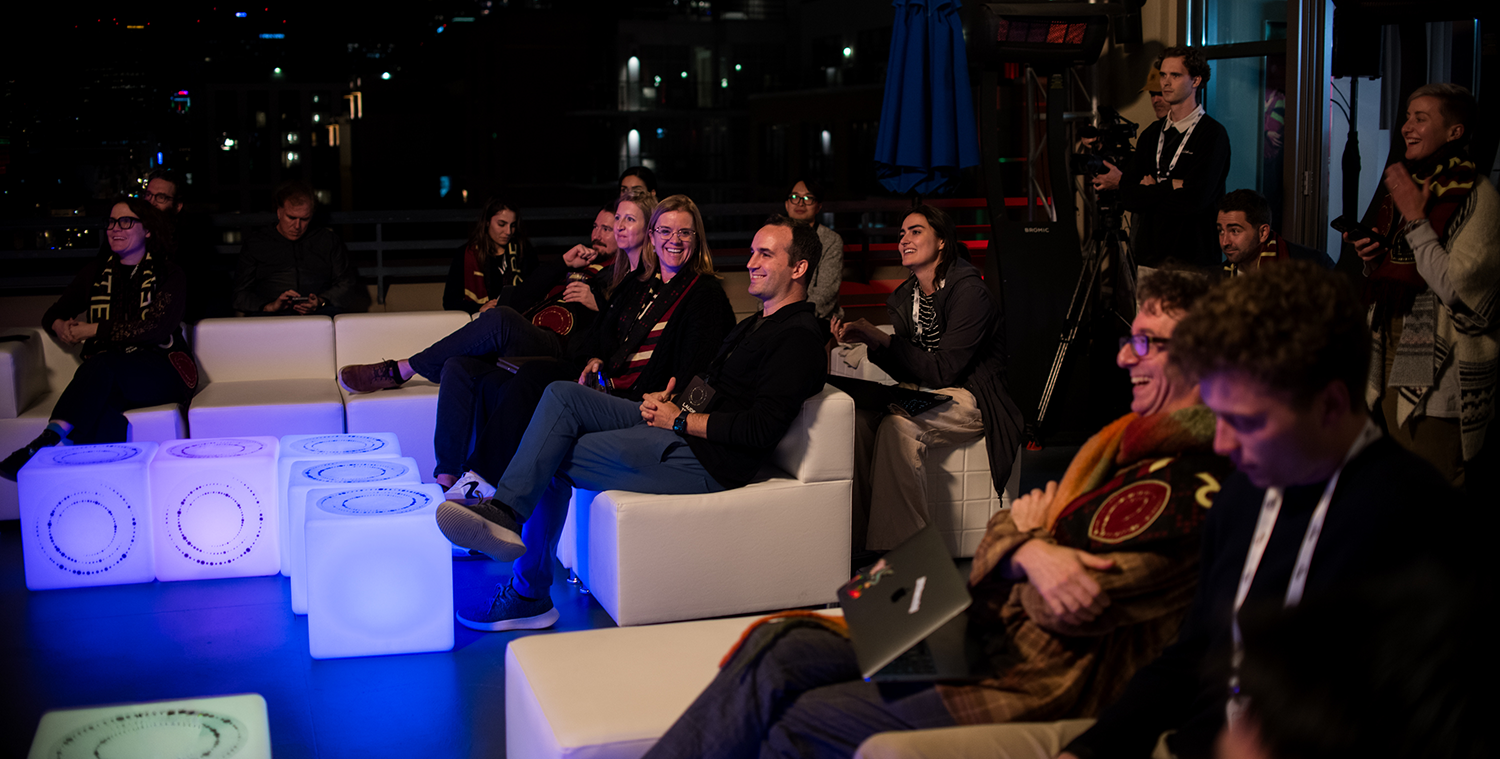




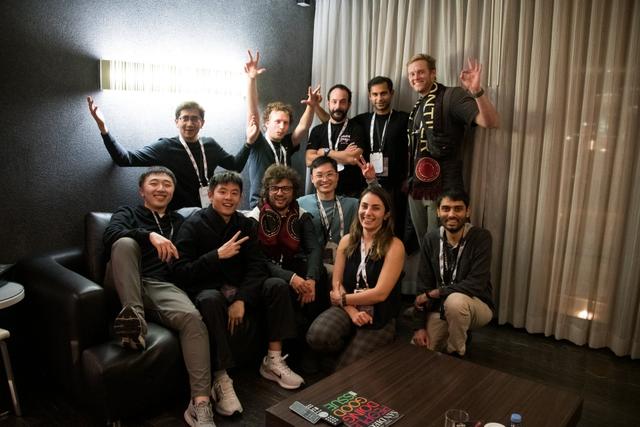
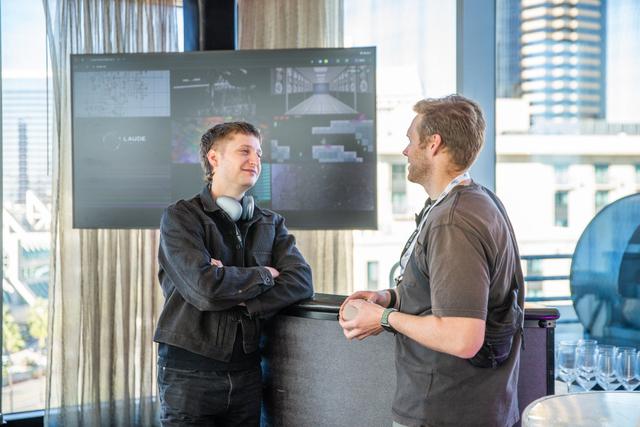
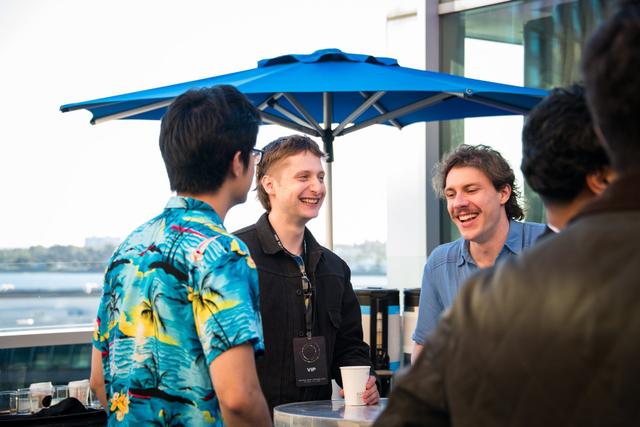
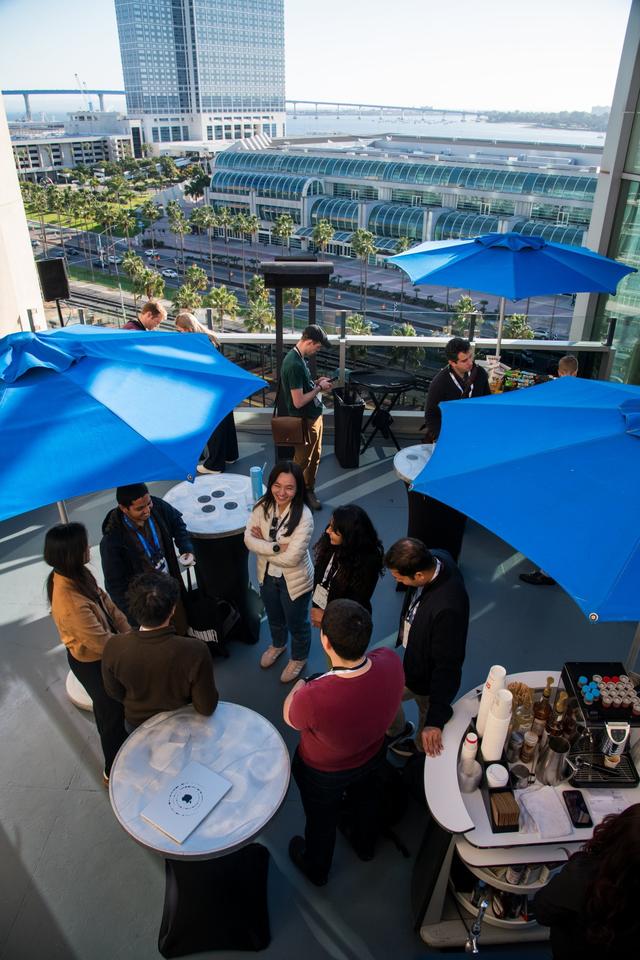
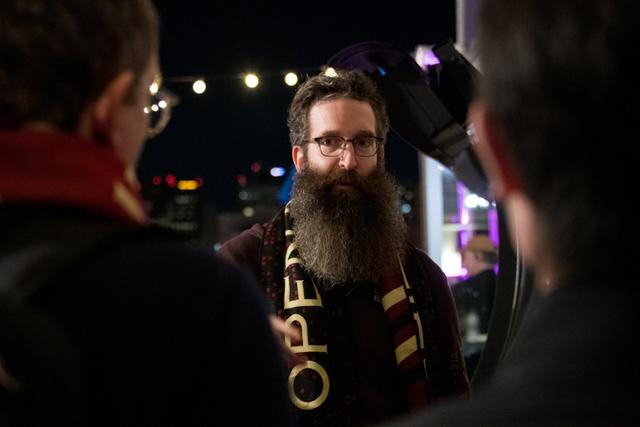
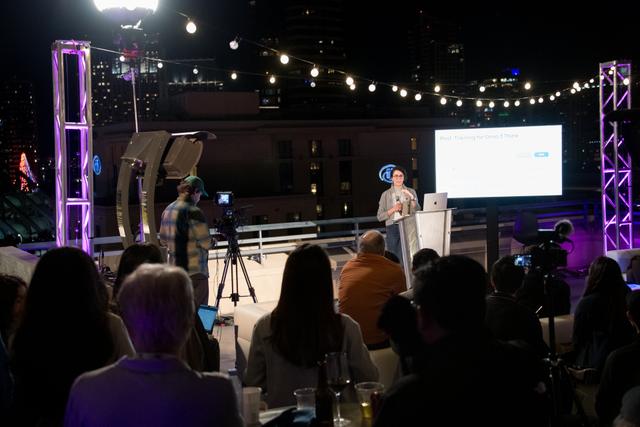
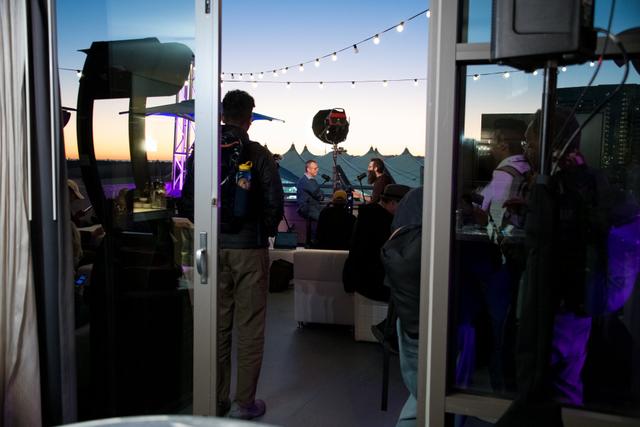
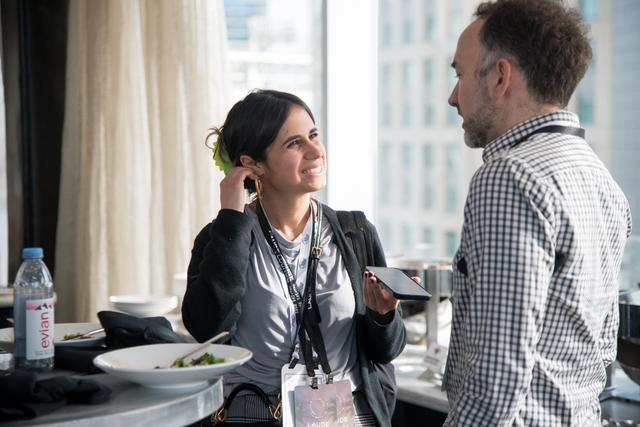
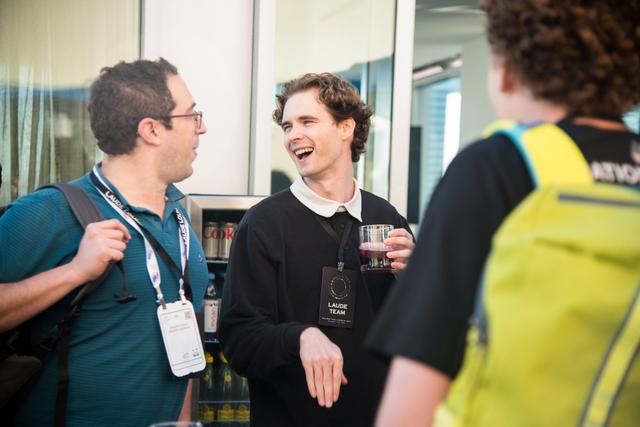
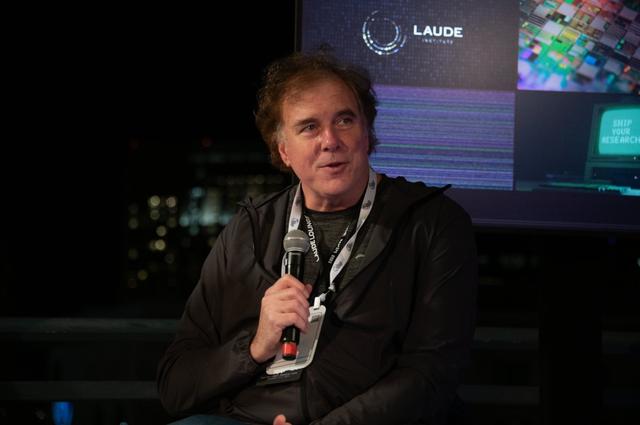
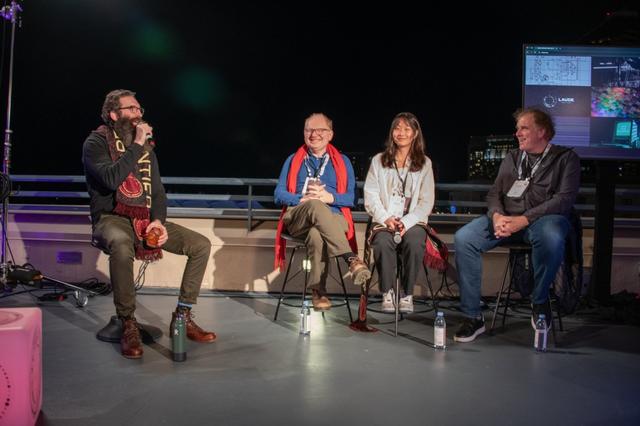
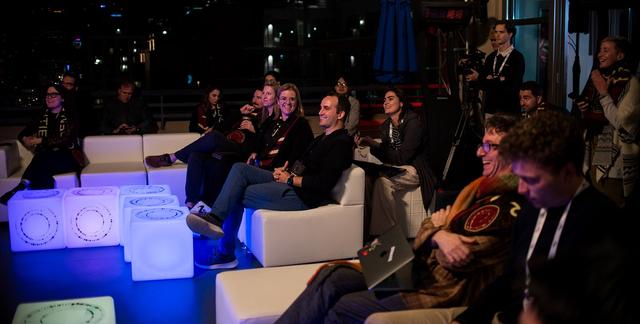
cross the street and high above NeurIPS, Laude Lounge became the kind of space that's hard to find at any major conference these days: a collaborative environment built for long-form, open, technically serious conversation.
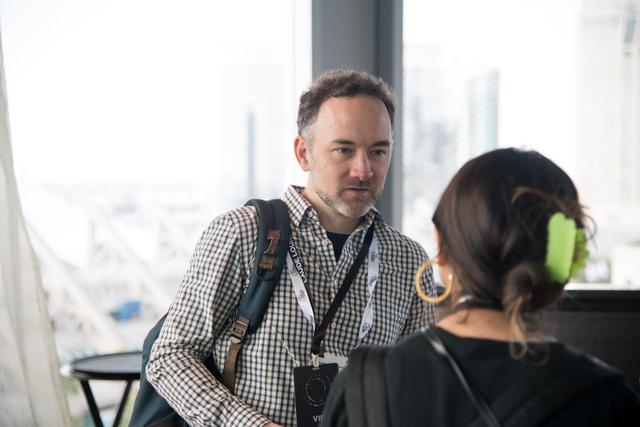
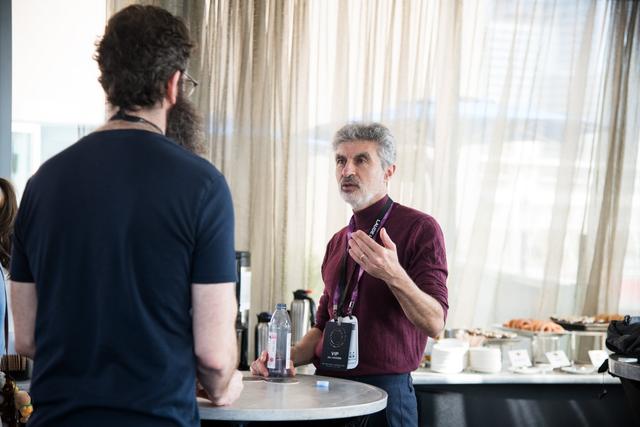
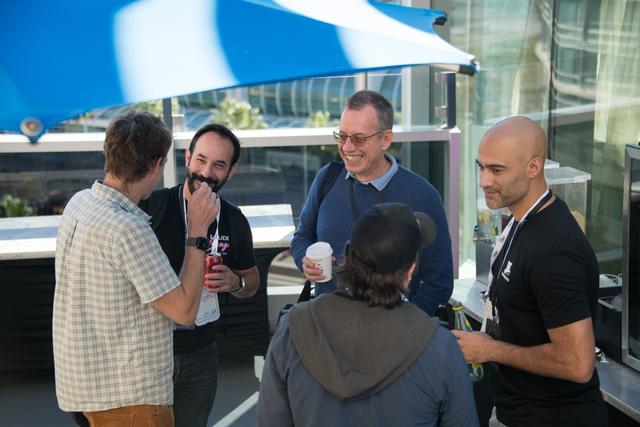
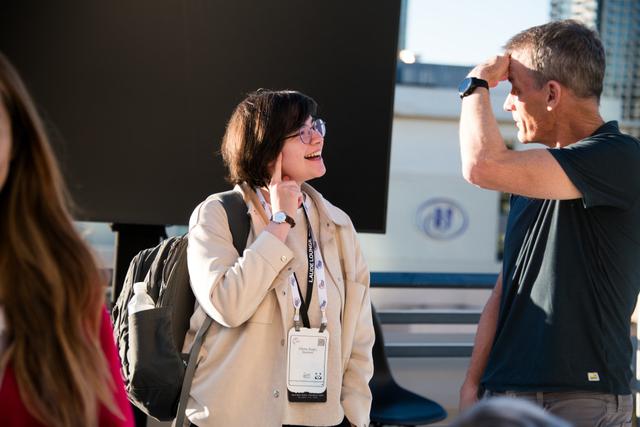
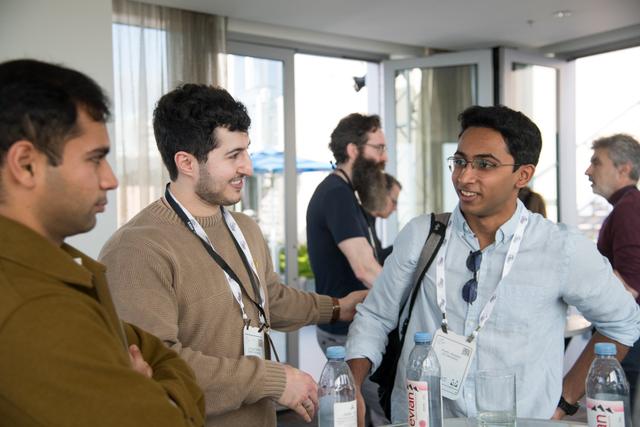
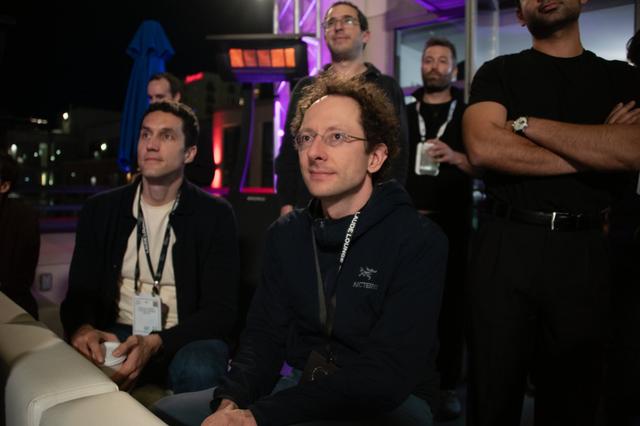
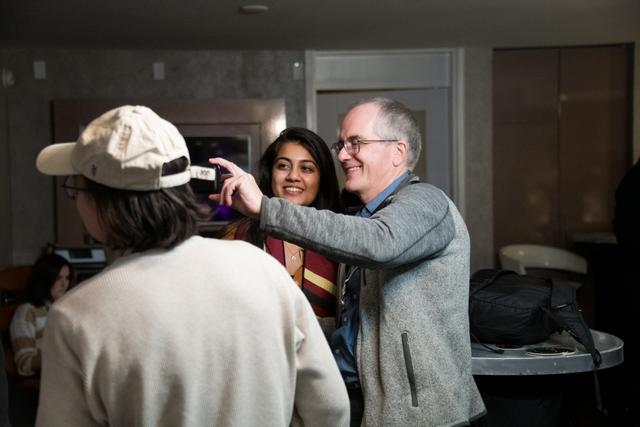
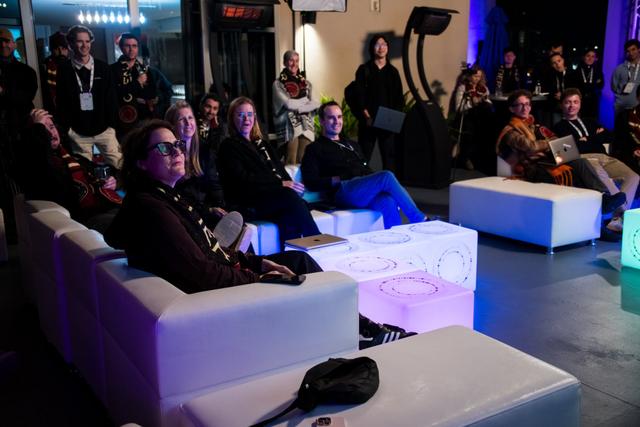
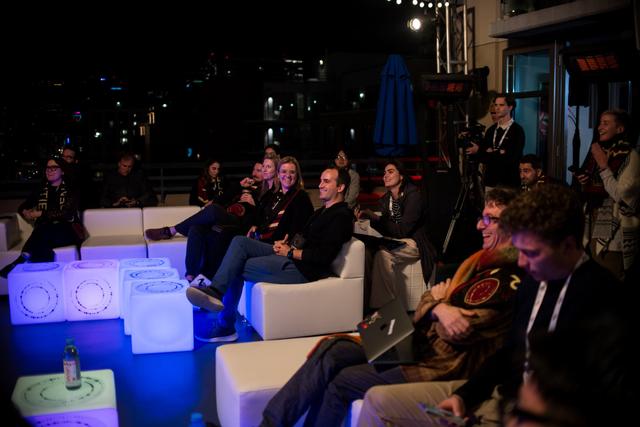
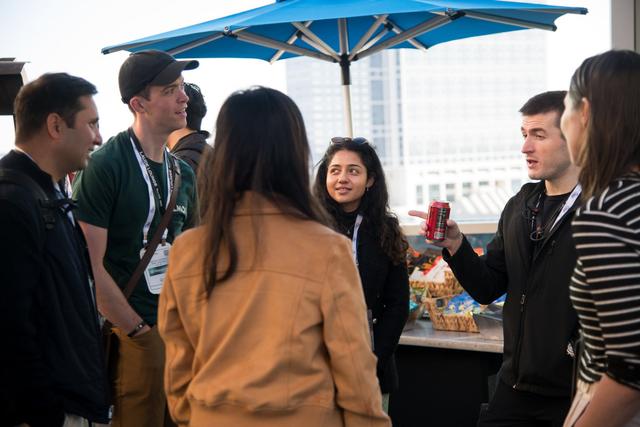
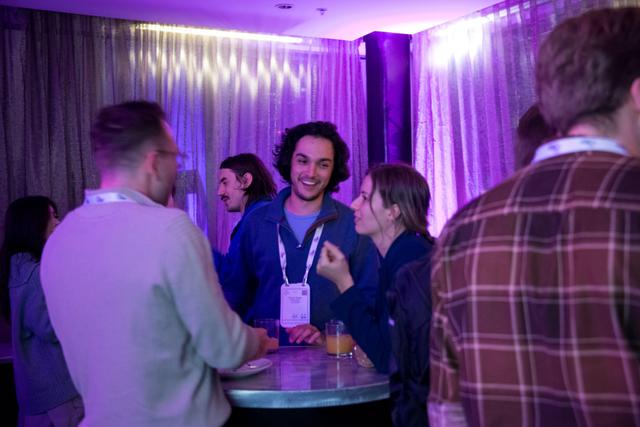
Inside, Turing Award winners sat beside first-year PhDs. Distinguished scientists watched students demo their latest projects. Researchers across areas were talking to people they don't normally cross paths with. Topics included evaluations, systems, pre-training, alignment, policy, RL, healthcare, agents, startups, and more.
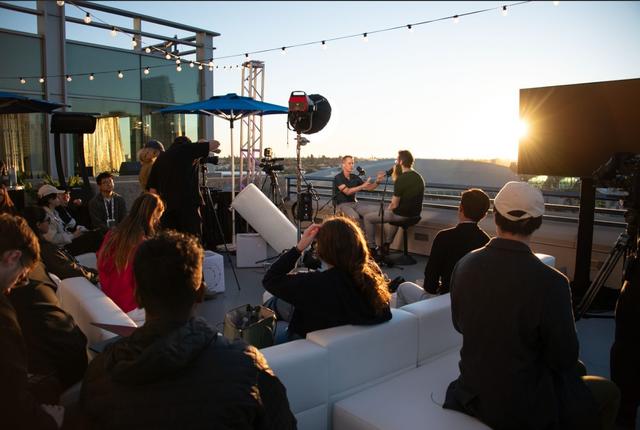
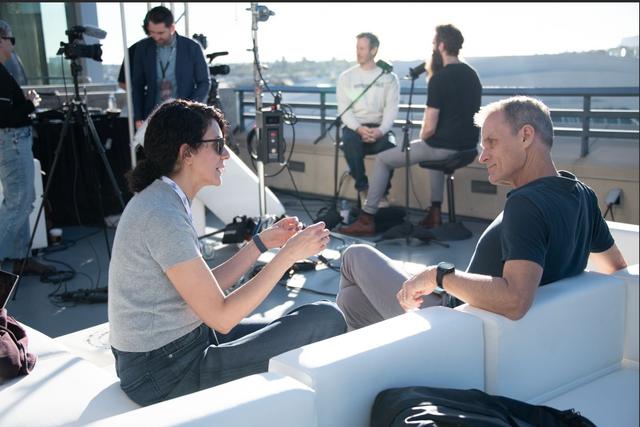
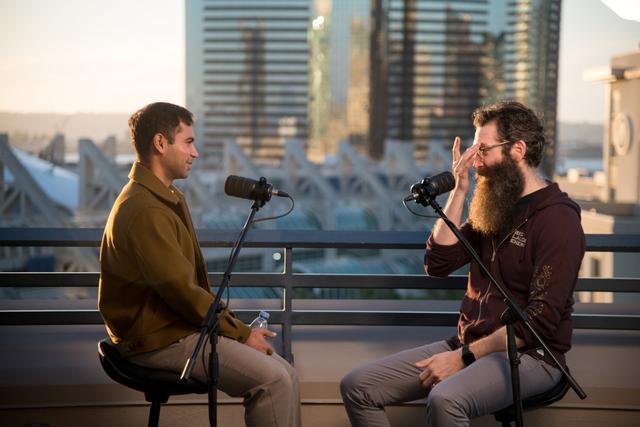
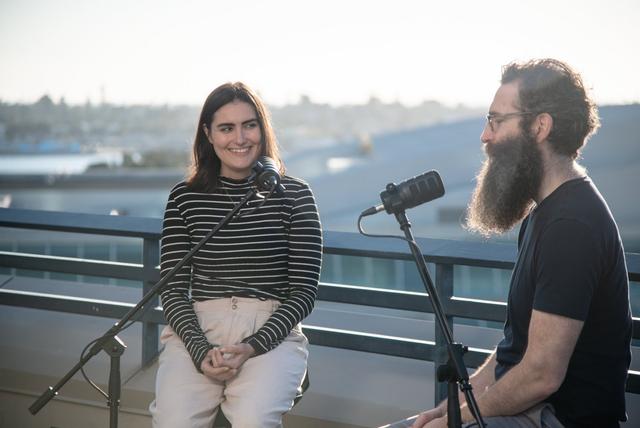
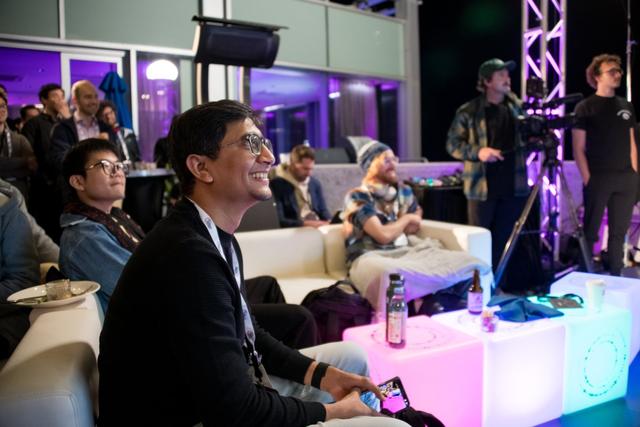
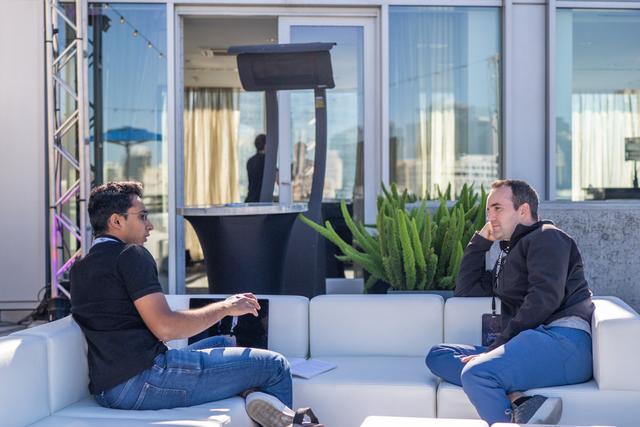
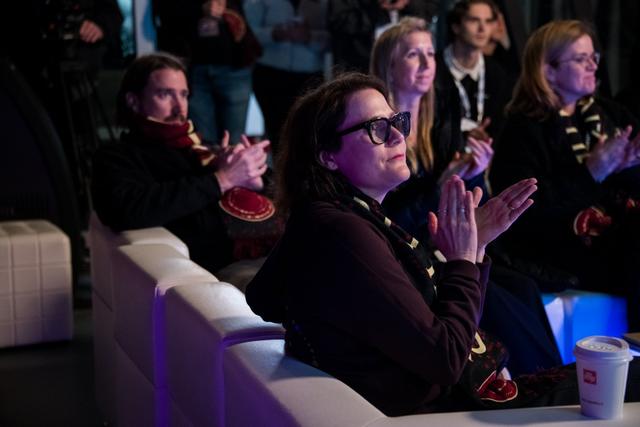
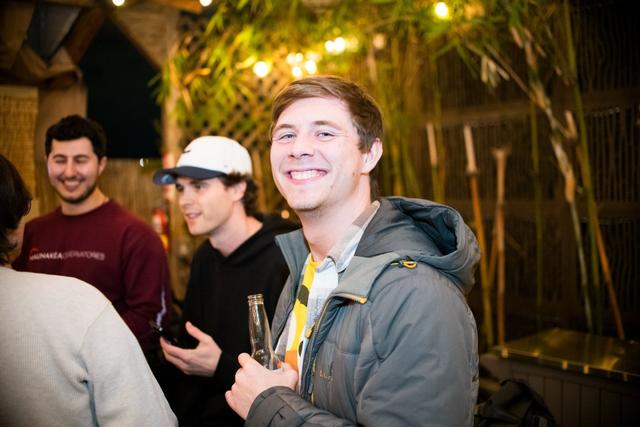
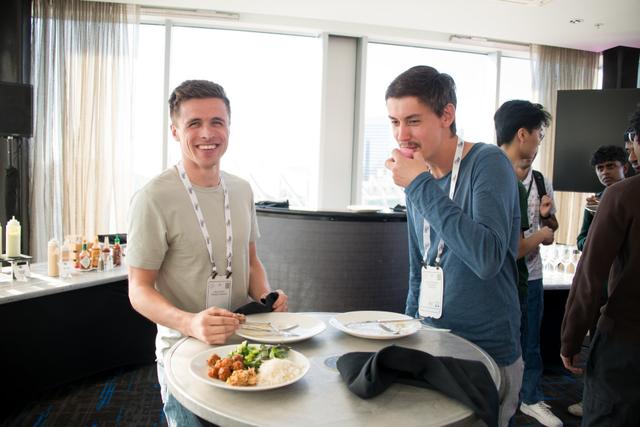
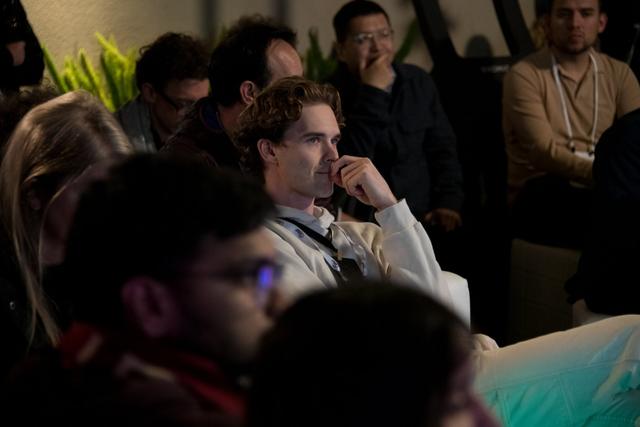
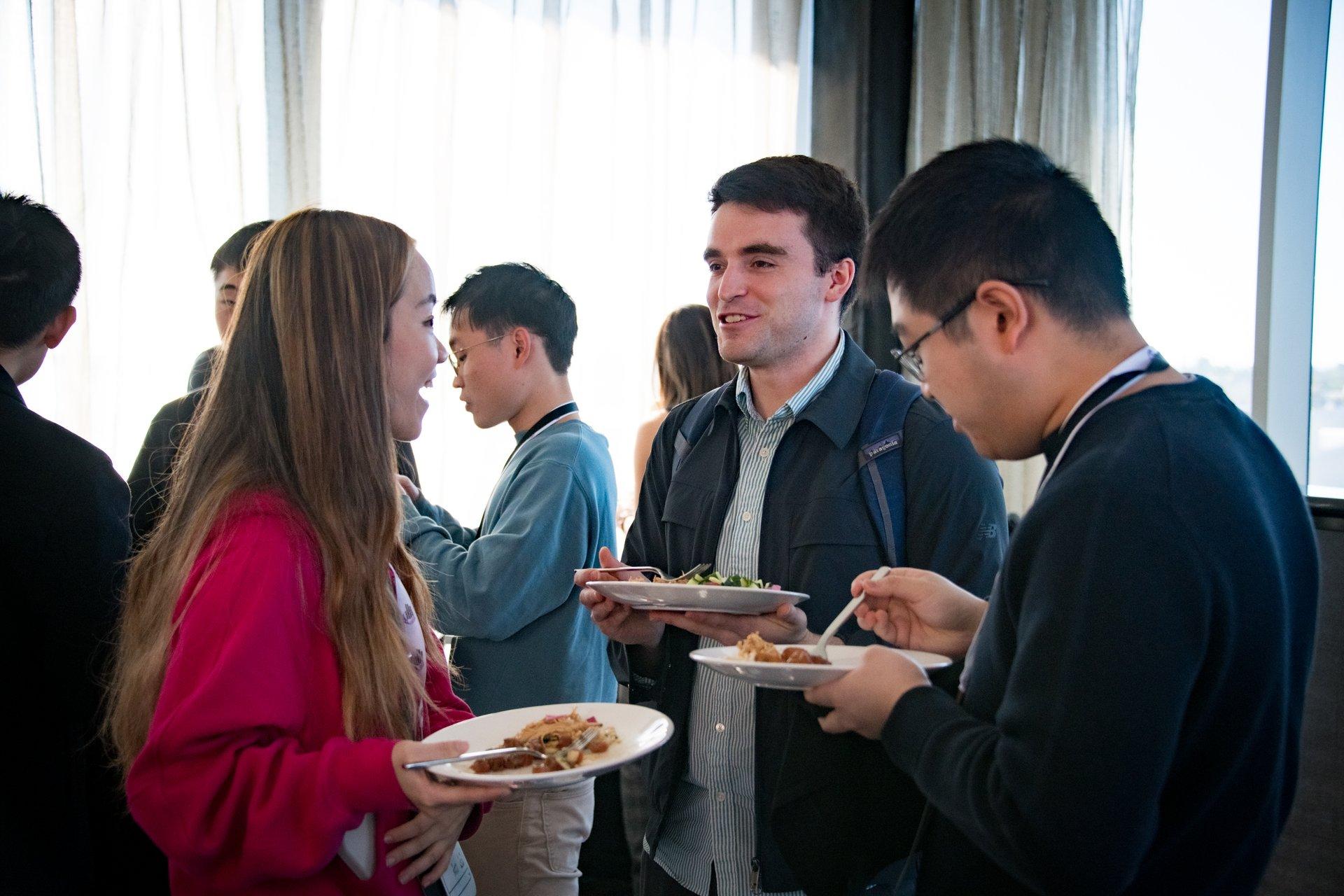
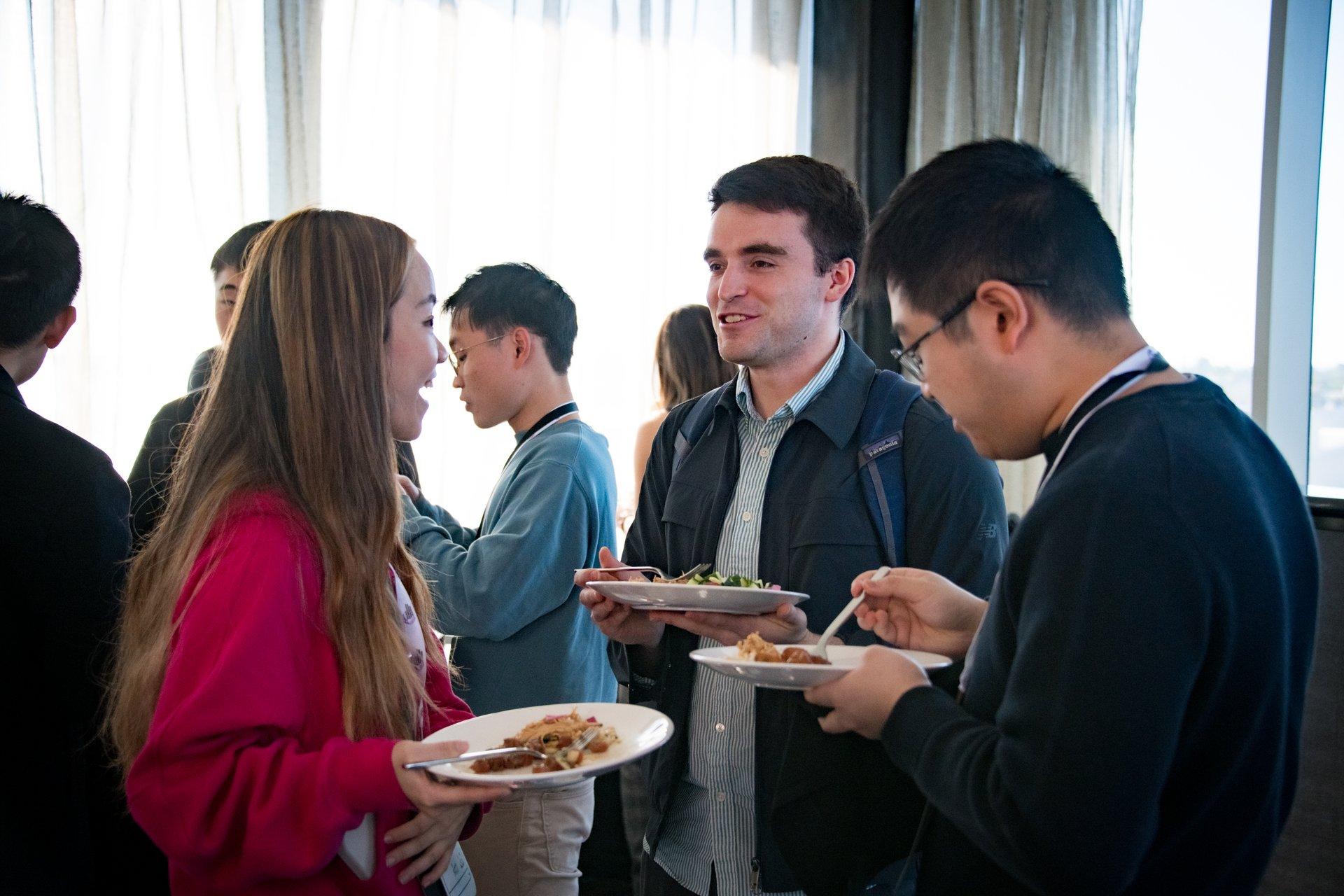
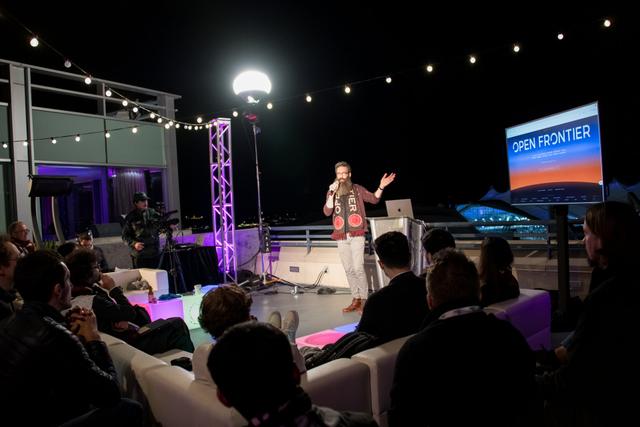
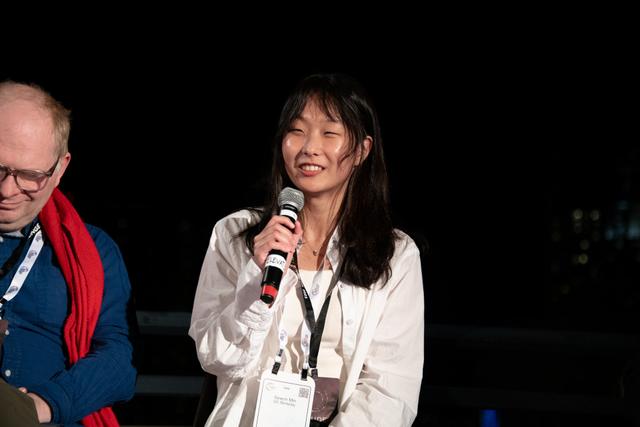
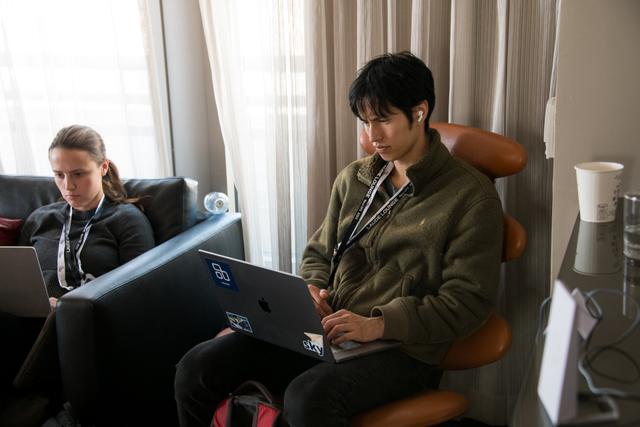
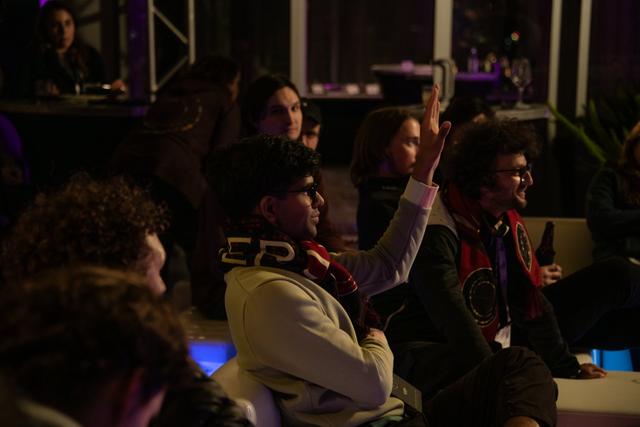
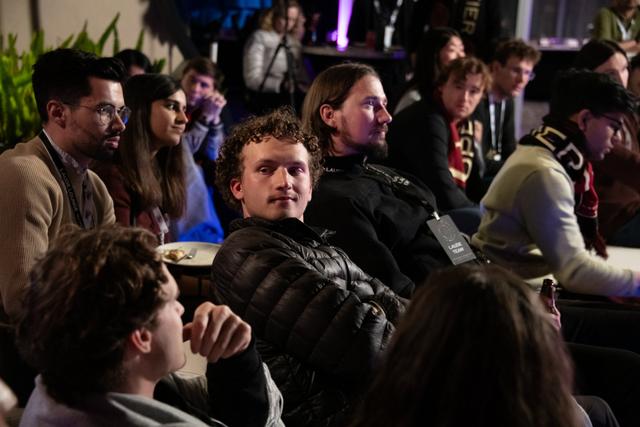
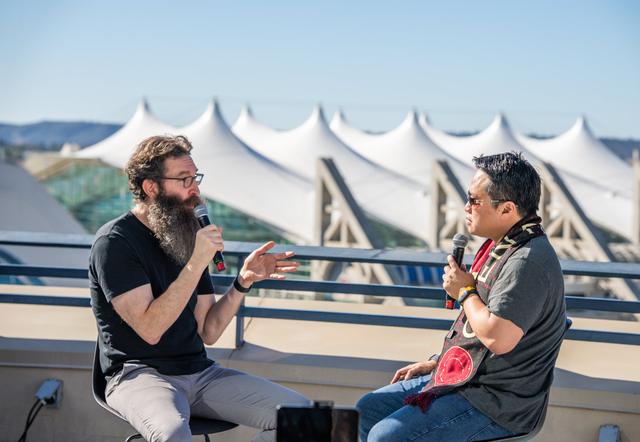
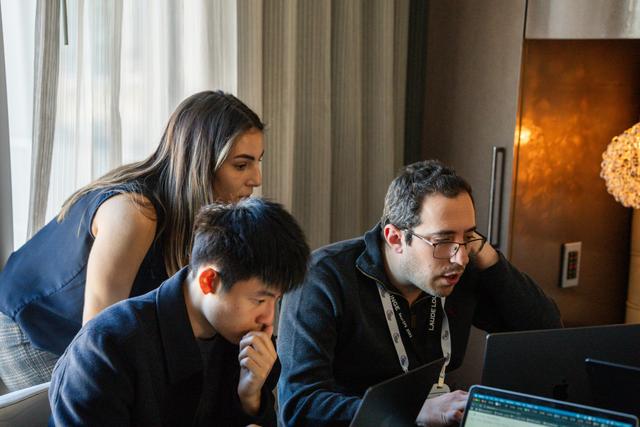
The structure was intentionally minimal, with no formal stage and no separation between speakers and audience. The goal was to create a space where people could talk, think, and work through ideas. And they did; every hour, all three days. We saw technical debates, overnighters on class assignments, discussions of incentive structures, and pair-programming on projects at the heart of the open frontier in AI.
People said the conversations happening at Laude Lounge were the ones they came to NeurIPS looking for.
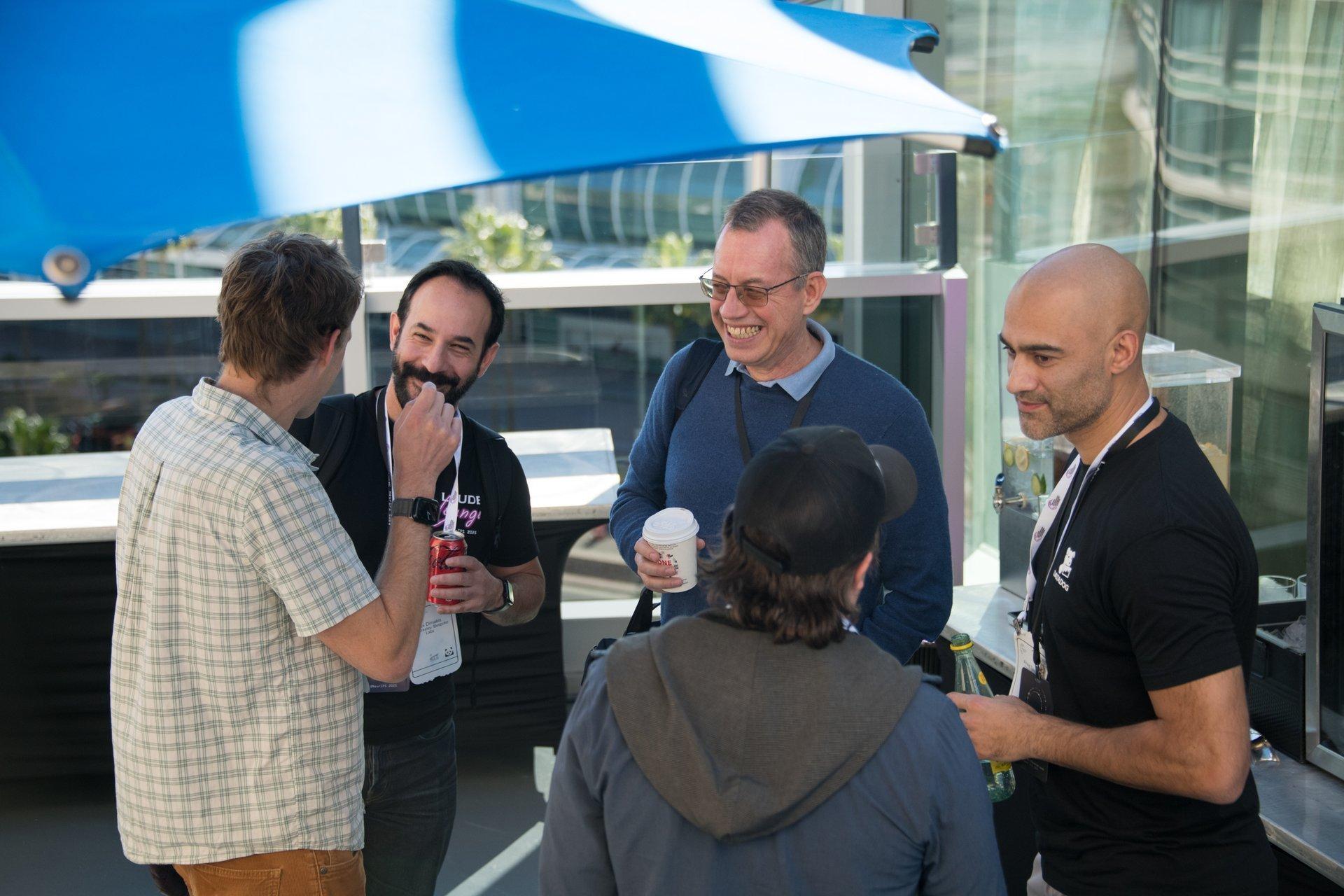

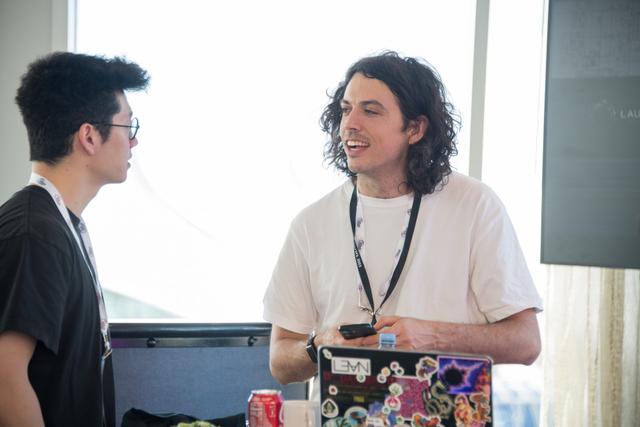
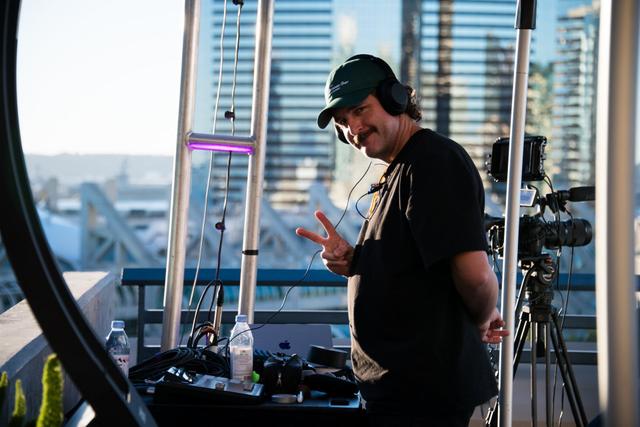

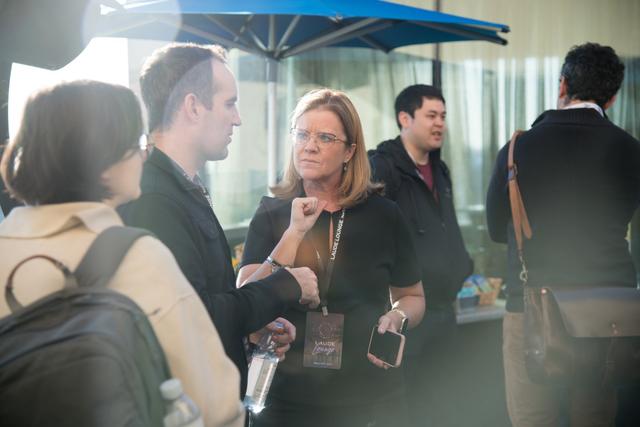
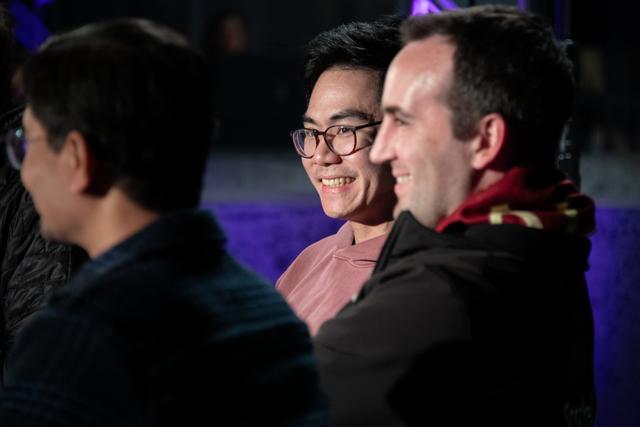


Laude Lounge at NeurIPS: three days of conversations shaping the frontier.
Missing Laude Lounge already?
We made you a playlist with the vibe.
DAY ONE
The builders in the room
The first day of Laude Lounge featured the people building the infrastructure of AI. Sessions focused on frameworks and scaffolding: systems, evaluations, optimization techniques, etc.
- — Jackson Clark (UIUC) walked through Stratus and SRE Gym, work that brings transactional no-regression guarantees to agent-driven system fixes; an early glimpse of what reliable agents may require.
- — Lisa Dunlap (Berkeley) unpacked StringSight, a tool for agent developers to understand agent trajectories at fine-granularity.
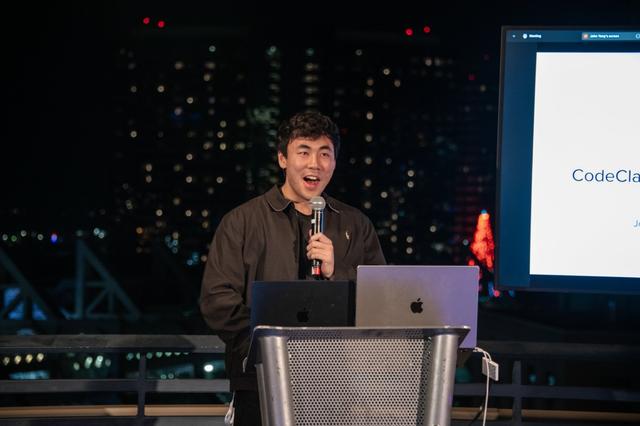
- — John Yang (Stanford) presented CodeClash, where agents write programs that compete against each other, revealing strengths and failure modes that other benchmarks often miss.
- — Etash Guha (Stanford) shared OpenThoughts, a Datacomp-style approach for fine-tuning workflows.
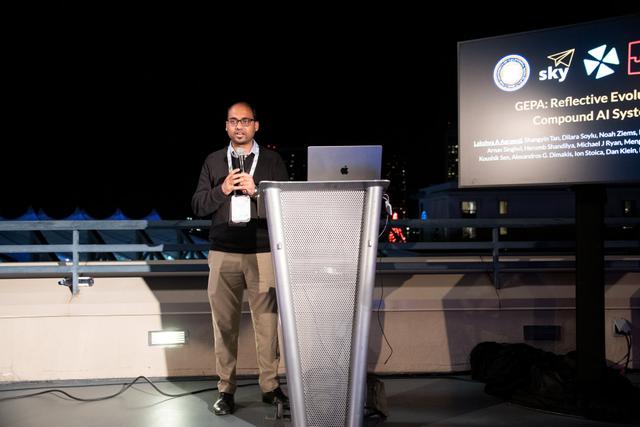
- — Lakshya Agrawal (Berkeley) outlined GEPA, a framework for large-scale prompt optimization balancing multiple objectives (e.g., correctness, safety, latency, cost).
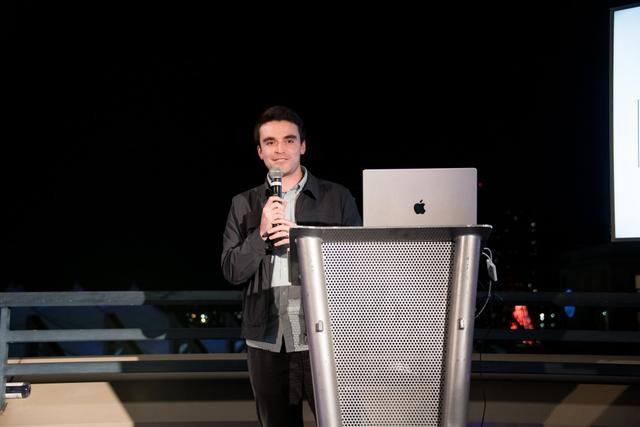
The evening demos went deeper, as Laude Slingshots teams shared early versions and demos of their work: prompt optimizers, tooling for reasoning about reasoning, as well as agents and evals for frontier use cases including sofware eng, software reliability, and spreadsheets. These projects represent research that aims to solve the problems of real users. The Slingshots programis designed to accelerate this impact-focused research, and amplify it by providing venues like the Laude Lounge demo-stage at NeurIPS.
Night One of Slingshots Demos
Across conversations, a few themes kept surfacing:
- Small engineering decisions matter. The difference between "works in a paper" and "works in practice" is often only a few lines of code (that can take days or weeks to arrive at).
- Research is moving fast at every layer of AI. Entire research trends are emerging and peaking and fading in less than a year.
- The details are where the breakthroughs hide. As one demoer put it: the real innovation often comes not from a new architecture, but from understanding how the pieces interact.
It was a day defined by builders: the students, postdocs, founders, and independent researchers sharing their early work.













DAY TWO
Who shapes the frontier?
If Day 1 was about tools, Day 2 was about who AI will be built for, and who will get to shape it.
In her discussion, Yejin Choi made the case that democratizing AI is not just a distribution challenge but a design challenge. "AI should be of, by, and for humans – all humans," she said, warning that without rethinking who benefits, "we risk a future where AI serves AI, and humans serve AI."
Yoshua Bengio framed the challenge differently, as a David-versus-Goliath moment for open science. Frontier labs are racing ahead with closed systems, but open communities, he argued, have unconventional strengths including collaboration, shared data, and collective creativity that become powerful when aligned. "It should be the biggest project of humanity… if we don't figure it out… we are going to be in a really bad situation either at the hands of bad people or at the hands of bad AI," Bengio said.
Omar Khattab spoke about how open models and open tooling accelerate research pathways that don't exist in closed environments, especially for younger researchers. Dilara Soylu and Robert Nishihara added more texture around incentives, evaluation gaps, and the challenge of doing meaningful research without shared infrastructure.





What we heard
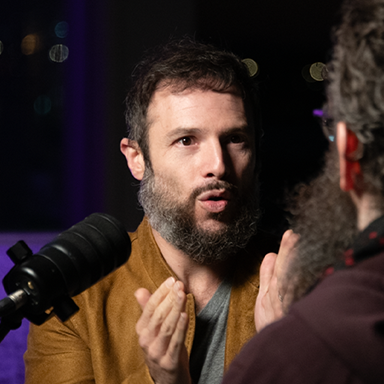
Across three days of interviews, panels, and hallway conversations, some themes surfaced again and again:
Openness at the frontier is narrowing, and many felt an urgency to preserve spaces where ideas, data, and tools can still be shared.
Coordination is missing, even across groups that want similar outcomes. People spoke about the need for shared infrastructure, shared language, and shared venues for serious technical exchange.
Data, not algorithms, is often the true bottleneck. Research ambition is outpacing what most teams can realistically access.
Collaboration needs new forms. The next phase of open research may rely on unconventional partnerships, multi-institutional work, and norms that reduce competition and ego.
Evaluation is breaking down. Benchmarks are brittle, often poorly aligned with real capabilities, and increasingly easy to overfit.
Students and early-career researchers are driving much of the frontier experimentation. Their hands-on work in fine-tuning, debugging, agent failures, and data curation was everywhere.
Breakthroughs will require longer horizons. Several speakers argued that the most impactful work comes from multi-year bets, not incremental gains on leaderboards.
Night Two - Evening Panels
Evening Panels
Where the debates happened
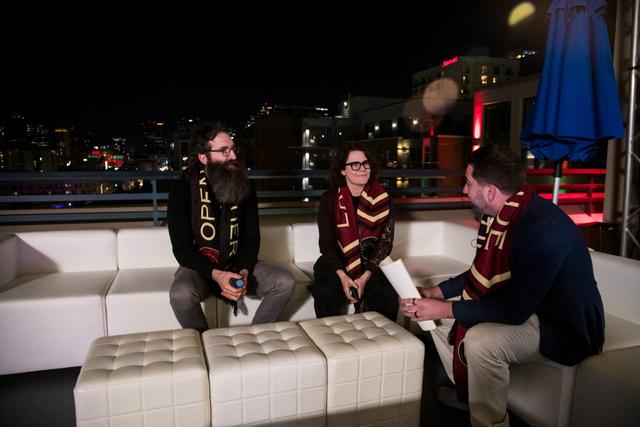
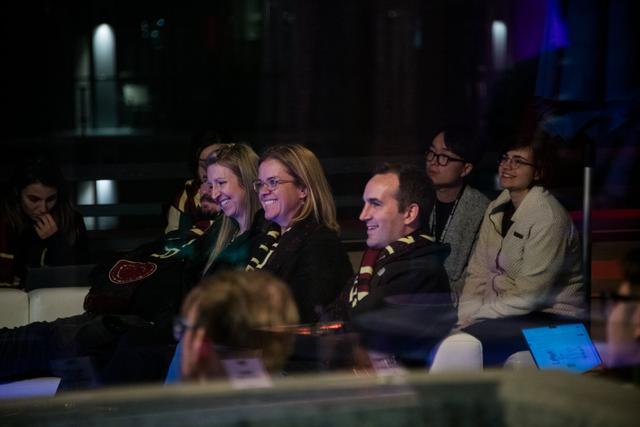
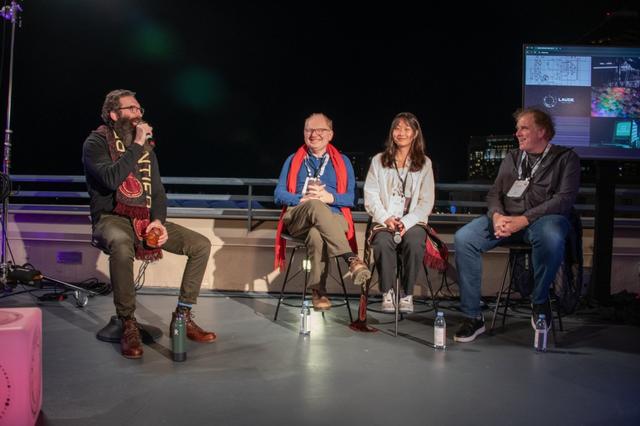
The panels on the evening of day two brought a different kind of energy to the Lounge. If the daytime sessions were exploratory and reflective, the evening panels were for friendly disagreement and debate. The conversations moved quickly between optimism, frustration, skepticism, and conviction, and the room stayed full until the very end.
The Berkeley AI Research (BAIR) panel came ready with unfiltered opinions and hot takes.
Alyosha Efros didn't hedge when asked about the trajectory of LLMs: "LLMs are going to blow over. They're done." To say that turned heads would be an understatement.
Trevor Darrell followed with a critique of the year's dominant hype cycle: agents, he argued, were "overhyped and overdiscussed in 2025."
Sewon Min added nuance around evaluation and generalization, pointing to gaps between what models seem capable of and what they reliably deliver.
It was a conversation that pulled no punches, and offered a sober assessment of where the field may be overconfident in itself.
Right after, the Research-to-Startup panel shifted the lens from scientific progress to translation.
Moderated by Chris Rytting, with Albert Gu (Cartesia), Braden Hancock (Snorkel AI), Mahesh Sathiamoorthy (Bespoke Labs), and Rich Caruana (Intelligible), the discussion traced the messy path from lab ideas to products people actually use.
Panelists spoke candidly about the tension between model accuracy and user performance, the limits of demo-driven fundraising culture, the challenges (and benefits) of being a founder/CEO with a research background, and the ways long-term vision competes with short-term milestones.
Across both panels, we heard a lot about honesty. For many attendees, these sessions were the highlight of the week, and offered a reminder that the field is at its best when its brightest voices are willing to debate its future in public.


DAY THREE
The work ahead at the frontier
By Friday, the conversations in the Lounge had evolved into something more focused. What began as scattered talk about openness, infrastructure, evaluation, and incentives became a broader discussion about what the field must build next – and how to build it.
Hanna Hajishirzi framed the problem through the lens of healthcare and data sensitivity. Hospitals and research institutions are understandably unwilling to share private data with closed labs, yet they need models that can work with their highly specialized datasets. Her work on OLMo and privacy-respecting "flex" models raised a central challenge for the open frontier: how do we create general-purpose systems that can adapt to sensitive domains without compromising privacy or transparency? And how do we evaluate those systems when post-training alters behavior in ways we still don't fully understand?
Jeff Dean widened the lens to the research ecosystem itself. He underscored the need for vibrant academic environments capable of supporting early-stage, high-upside ideas, the kinds of 3-5 year bets that have historically led to breakthroughs. Pathways, large-scale TPUs, and distributed systems were not overnight inventions (and he would know); they came from giving teams the room to try ambitious things before their usefulness was obvious.
Ion Stoica spoke to the practical side of progress: coordination. AI is not a niche research area: every institution, whether skeptical or enthusiastic, is responding to it. To make meaningful headway, he argued, the best people need to work on the same hard problems rather than duplicating effort in isolated silos. Sharing information, comparing approaches, and aligning research trajectories is no longer optional.
Aza Raskin added a human-centered perspective, questioning what responsible, aligned systems will require not only in terms of model behavior but in the social structures around them. Anastasios Angelopoulos and Thomas Wolf pointed to evaluation and decentralization as two pieces of unfinished infrastructure the community must take seriously if "open" is going to remain meaningful beyond model releases.
Taken together, the Day 3 conversations offered clarity: the frontier is not defined just by scale or capability. It must also be defined by coordination, infrastructure, evaluation, and the willingness of researchers across institutions to build shared foundations rather than parallel empires.







A gathering for
the Open Frontier
By the end of the week, it was clear that many of the conversations in the Lounge were honing in on the same challenges: how researchers coordinate across institutions, how we evaluate frontier systems, how sensitive data can be used responsibly, and how long-horizon research fits into a field that moves quickly.
These aren't problems any single lab, company, or even country can solve on its own, and they came up often enough, from people with very different backgrounds, that the pattern was hard to ignore.
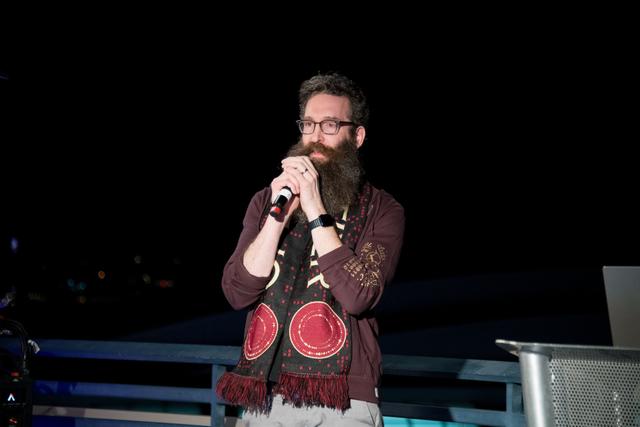
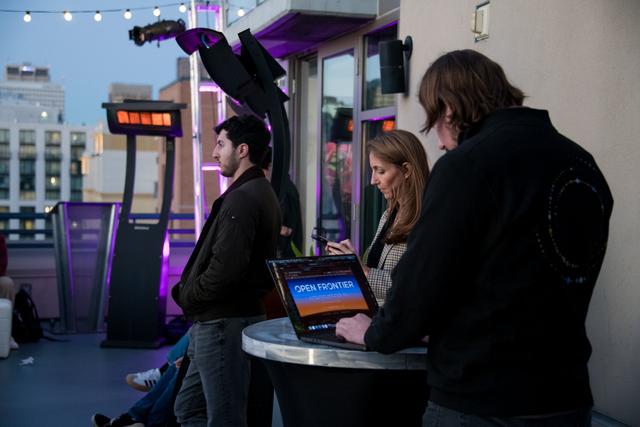
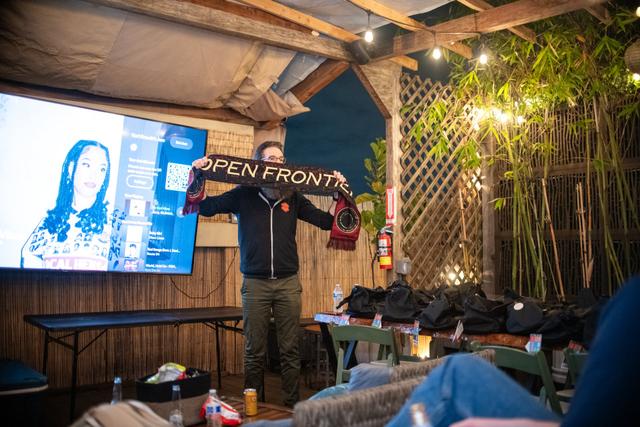
That's the context in which Andy announced Open Frontier.
Open Frontier will be a one-day, in-person working convening in Spring 2026, bringing together 100 researchers, scientists, and engineers working on open frontier AI.
The goal is to create a space where people can compare notes, share unfinished work, pressure-test ideas, and make progress on the parts of the stack that require collaboration.
The event will be livestreamed all over the world, so the broader community can follow along and build on what emerges.
Collaborators already include groups across academia, nonprofit research, and industry; AI2, BAIR, Anyscale, Hugging Face, Mistral, Berkeley SkyLab, Reflection AI, and others – each approaching the frontier from a different angle, but all running into similar bottlenecks.
"We must open the frontier for all of humanity. That means open research, open discourse, open-weight models, and getting into a room together." — Andy Konwinski

The View from the Frontier: Reflections on NeurIPS 2025
The View from the Frontier
When you get enough top researchers who ship in the same room, something clicks. Here are a few themes that I noticed:
Themes I heard at the Lounge
Don't just improve the AI, use AI to improve the inputs to the AI, the outputs from the AI, and the systems around the AI. While a lot of research continues to focus on improving models, even more research is focused on optimizing the parts of the stack around the model (e.g. prompt optimizers, code artifacts that the model produces, frameworks for generating data using RL, new evaluations, etc.)
Use AI to accelerate research. The big closed AI labs are focused on building AIs that are strong software engineers and software architects. The core idea is Ion Stoica is teaching a seminar at Berkeley about state-of-the-art techniques and OSS projects that enable CS researchers to accelerate their research progress. For operating systems and distributed systems research, it is typical to build and use simulators to prototype validate ideas before investing more energy into building and trying them in production. So what if we show AI agents how to build and use simulators like PhD students do?
Research areas folks are excited about
Evolutionary algorithms vs. RL.
This came up repeatedly. AlphaEvolve from DeepMind got a lot of attention—using LLMs inside an evolutionary loop to discover new algorithms, including improvements to matrix multiplication that beat 40-year-old standards. OpenEvolve, the open source implementation, is making this accessible to the broader research community. GEPA (Genetic-Pareto) and related work are pushing this further. The technique focuses on evolving the code artifact rather than the model generating it, which sidesteps some of the instabilities that plague pure RL approaches.
Prompt optimization.
This is adjacent to the genetic algorithm work but deserves its own mention. Projects like DSPy's MIPRO, BetterTogether, and GEPA optimizers use algorithms and models to optimize prompts. This ties into a broader theme: in addition to treating the model as something you fine-tune, you can also treat it as a black box and optimize the inputs, the outputs from it, and the system around it.
Recursive learning.
This one is related but distinct: models using models (using models…). The core idea is teaching models to write better prompts that will be passed to themselves or other models. It's a kind of self-improvement loop: the model learns what instructions work best, then generates those instructions.
Continual learning.
Multiple researchers brought this up; how do you build systems that keep learning over time without catastrophic forgetting? The optimizers I mentioned feed into this: if you can evolve prompts and programs continuously, you're getting closer to systems that adapt rather than stagnate.
Scalable small-budget frontier research.
This one is critical. Jeff Dean pointed me to a Google paper presented at NeurIPS on diffusion transformer architectures. Beyond the specific results on blended architectures, what struck me is the methodology: they're developing techniques that let you test hypotheses on smaller models with confidence that the results will scale up. I noticed the same pattern in a recent paper showing evidence of RL efficacy across different contexts—they used a few hundred GPT-2 scale models for their research and then argued the results scale to larger architectures.
This matters enormously. If frontier research can happen with tens of millions in funding instead of hundreds of billions, we've changed the game for open research. The current concentration of compute is a crisis for academia and independent researchers. Any technique that reduces the barrier to testing important hypotheses is worth paying attention to.
Human-in-the-loop evaluation beyond verifiable rewards.
LMArena showed us that human preference data can be a powerful signal. But there's interesting work on extending this model—projects like StringSight from UC Berkeley are exploring new ways to get humans back in the evaluation loop for capabilities that are hard to verify automatically.
Compound systems.
Omar Khattab and Robert Nishihara both emphasized this framing: the layer above the model that treats it as a sort of black box, the way software treats the CPU or GPU. This is where prompt optimization happens, where you can swap models in and out, where you compose multiple calls into agents and pipelines. The model becomes a component rather than the whole system. I think this abstraction layer is where a lot of the interesting innovation is going to happen.
Final thoughts
It was inspiring to have so many high impact researchers hang out at Laude Lounge. We aren't done bringing together the builders of the next open source AI project, algorithm, model, or paper. If you're one of them, we will see you in the next few months at the Open Frontier meeting.
— Andy Konwinski
NeurIPS 2025 Takeaways

// BRADEN HANCOCK
There were a bunch of conversations with a general sentiment of "I don't know what's going to take AI to the next level, but I don't think we've cracked it yet."
There were a bunch of conversations with a general sentiment of "I don't know what's going to take AI to the next level, but I don't think we've cracked it yet."
Other notes that came up repeatedly: continual learning (that elusive holy grail that has intrigued AI researchers for decades but is starting to feel obtainable now), alternative architectures (a fair bit of attention has now turned toward diffusion models, pun intended), and some world models or new sources of basic knowledge acquisition beyond text pretraining (anything that could defy the bitter lesson and give us hope for another step change). Notably absent was research from the American frontier labs - but there was a lot from the Chinese ones. The subtext was clear: if you want open discourse on the frontier of AI in the US, you're not going to get it from either.

// ETASH GUHA
There was a lot of focus on end-to-end pipelines for agents.
There was a lot of focus on end-to-end pipelines for agents.
Most of that focus centered on reinforcement learning, and mostly from the algorithmic side. Reasoning continued to be popular as a paradigm, but I think agentic behavior is on the come-up. It still feels like the open source community hasn't settled on a working recipe for RL. My favorite talk was with Qwen3-Coder. They discussed how to get strong training pipelines for agentic models.

// CHRIS RYTTING
So little conference conversation has to do with its actual, formal proceedings.
So little conference conversation has to do with its actual, formal proceedings.
I heard a lot of discussions about podcast episodes featuring the field's leaders, and noticed researchers were more likely to talk about their new paper going on arXiv than anything in the poster hall. I think this is because at 30,000 registrations, NeurIPS has become too big to serve as an actual academic conference. What do RL people and HCI people have to talk about? Instead, people spend all their time in ad hoc 1:1 meetings, jockeying for invites to the most exotic parties, and telling me "no" when I asked them (all 20) if they'd seen anything interesting at the conference.

// DILARA SOYLU
The community is starting to acknowledge the importance of textual feedback and prompt optimization in the context of reinforcement learning.
The community is starting to acknowledge the importance of textual feedback and prompt optimization in the context of reinforcement learning.
There is also a lot more emphasis on high quality data for reasoning, I quite enjoyed the talks from the OLMo and OpenThoughts teams. I look forward to seeing the fruitful combination of the two, using prompt optimizers to curate high quality training data for reasoning and agentic behavior.

// Alex Shaw
The Laude Lounge ended up being a better place for me to meet people, have good conversations, and spend my time at NeurIPS than at the actual conference next door.
The Laude Lounge ended up being a better place for me to meet people, have good conversations, and spend my time at NeurIPS than at the actual conference next door.
It was unlike anything I've participated in before; fantastic company, and made some awesome new connections with folks I'm really looking forward to speaking with again. It was also great to share space with some of the biggest names in the space, in a casual and conversational setting.

// K. TIGHE
Laude Lounge at NeurIPS felt like a community hitting its stride.
Laude Lounge at NeurIPS felt like a community hitting its stride.
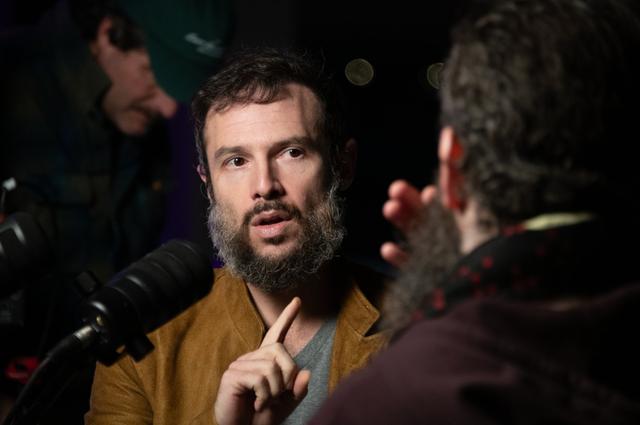
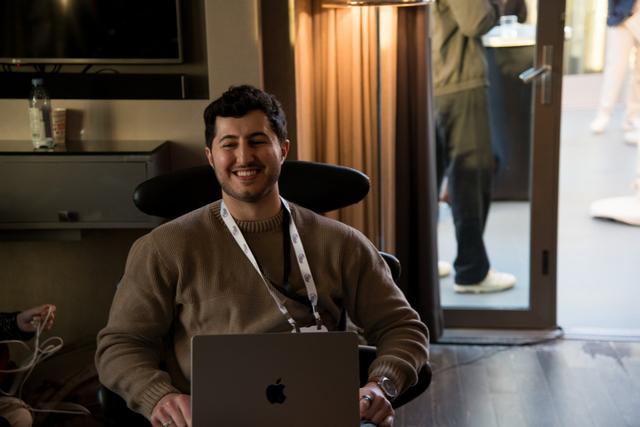
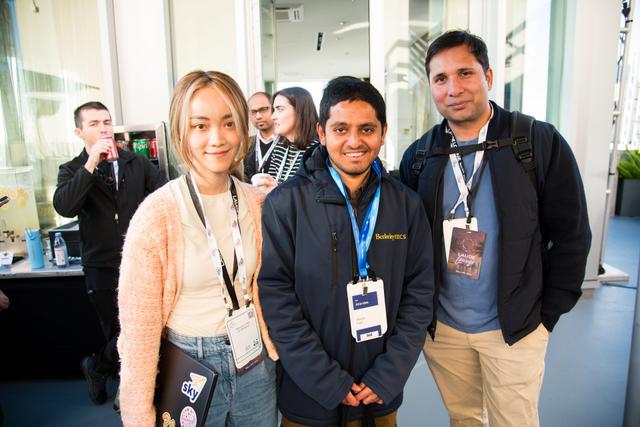
You could see PhDs in deep conversation with research giants, teams from different labs crowded around the same laptop, and people who met five minutes earlier already sketching out an idea together. Seeing demos from the open frontier AI stack on the final night was a highlight. It is work with immediate impact and real-time relevance, shaped by deep collaboration, and many of our residents and Slingshots are right in the middle of it. Across these three days, the Laude Lounge felt open and creative in a way you just can't script. Things sparked, you could feel it. Andy, who has never even appeared as a guest on a podcast, held court in front of a bank of cameras for hours of back-to-back conversations that were genuinely fascinating to watch. More than a dozen journalists spent time in the Lounge and helped shape an atmosphere of open discourse. Covering frontier AI research is a tough beat. It takes speed, technical fluency, and an unwavering sense of responsibility. Watching these reporters step into conversations with researchers and ask clear, grounded questions about what they are seeing at the edge of the field was one of the best parts of my week.

// LAKSHYA AGRAWAL
The key focus seemed to be around improving reinforcement learning for various reasoning-intensive tasks.
The key focus seemed to be around improving reinforcement learning for various reasoning-intensive tasks.
An undercurrent, as was evident from the talks of Prof. Azalia Mirhoseini and Prof. Ion Stoica, was the importance of reflective text space compute scaling through the use of evolutionary algorithms combined with LLMs, to aid solving long-standing systems challenges including creating performant kernels and chip design. Such approaches also lend themselves to AI4Science usecases, which was another major thrust at NeurIPS 2025.

// PETE SONSINI
This year's NeurIPS was unlike any other - more attendees, more media, and more VCs than ever before.
This year's NeurIPS was unlike any other - more attendees, more media, and more VCs than ever before.
The energy was amazing. What stood out most to me was seeing so many brilliant researchers collaborating in the Laude Lounge, building community around open research in real time. It was especially inspiring to watch Laude's Open Research Residents present their work on advancing the open frontier. The pace of progress in this community is staggering, and the spirit of collaboration is what makes it truly special.
A record of the room
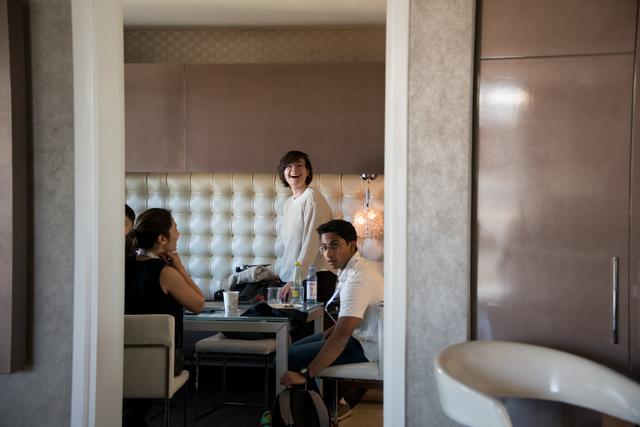
The Lounge wasn't created to make a splash, it was created to make a space; one where people could talk comfortably and openly about the work they're doing and the problems they're running into. The three days captured here are a record of that room: researchers comparing notes, disagreeing openly, testing ideas, and noticing patterns together.
For many who passed through, the conversations here were more substantive than what they found on the main floor at NeurIPS. This page is meant to preserve that experience. The videos and photos aren't just highlights; they're documentation of work in progress.
The announcement of Open Frontier points to where these threads might go next, but the Lounge itself stands on its own, showing what can happen when the field's leading researchers, rising scientists, and builders share a room built around curiosity.
The future of the open frontier won't come from any single place. It will come from people doing the work together, in spaces like this one. We'll see you at the open frontier.